
Before the hardwood goes down
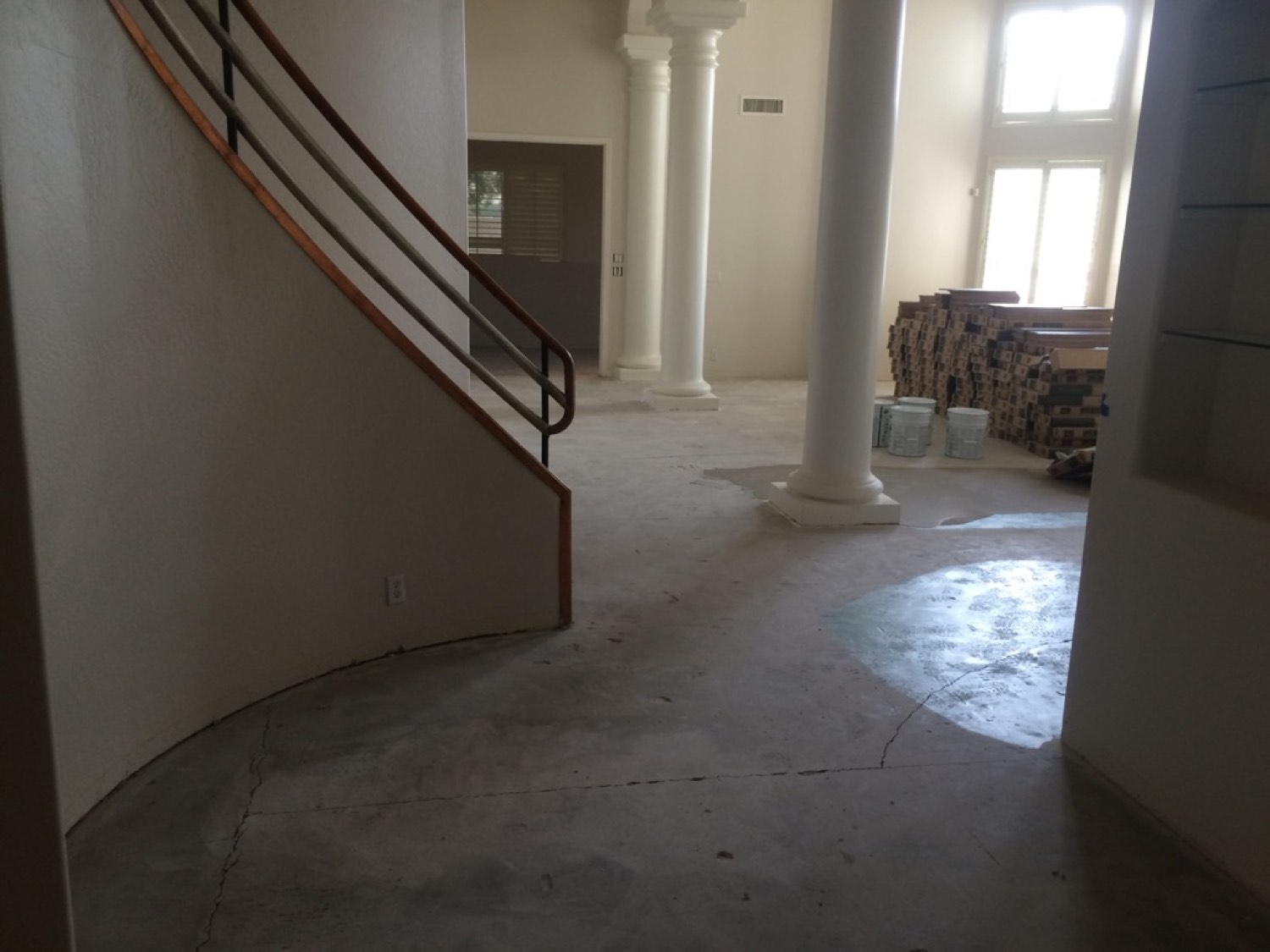
Dustless tile removal, and a slab that's ready for wood.
Most Phoenix homes sit on a concrete slab, and a great many of them still have the tile that was laid on it when the house was built. Getting it off is one job. Leaving behind a slab the next floor can actually live on is the one that matters.
Why us and not a demolition crew
One contractor, one accountable slab
Plenty of companies in Phoenix do dustless tile removal - or dust-free tile removal, the same thing under a different name - and nothing else. We do the removal and the floor that goes on top - and that changes who is responsible when something moves.
The slab is where two jobs meet
Hire a demolition crew and a flooring company separately and it looks cheaper on paper. In practice it creates a gap at exactly the point that decides whether the new floor works: the flatness, the moisture and the condition of the concrete.
If the floor later shows a hollow spot or a lifted board, the installer says the slab was not prepared properly and the removal crew says it was fine when they left. Both can be sincere. Neither is going to fix it.
When one company takes the tile off, grinds the slab, tests it and lays the floor, there is nobody to point at. That is the whole argument, and it is the reason this page exists on a hardwood flooring site rather than a demolition one.
Why tile removal is its own job in Arizona
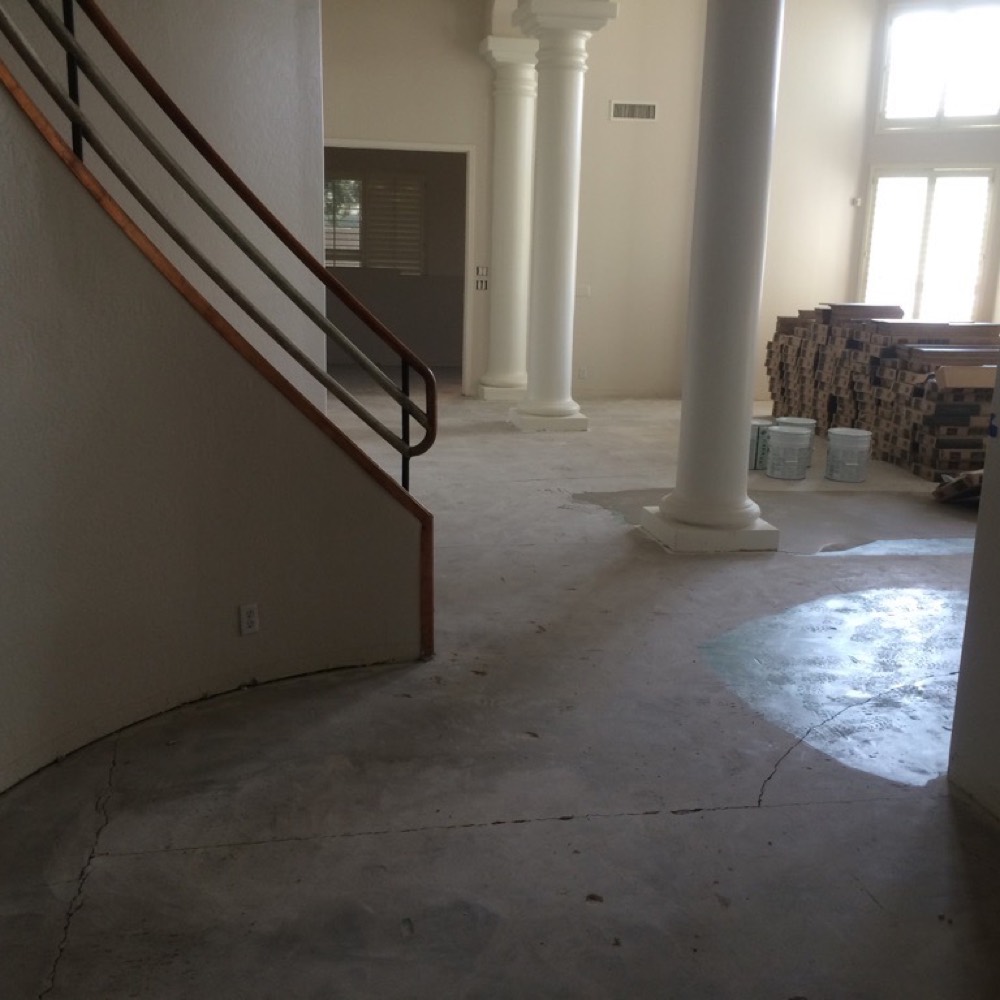
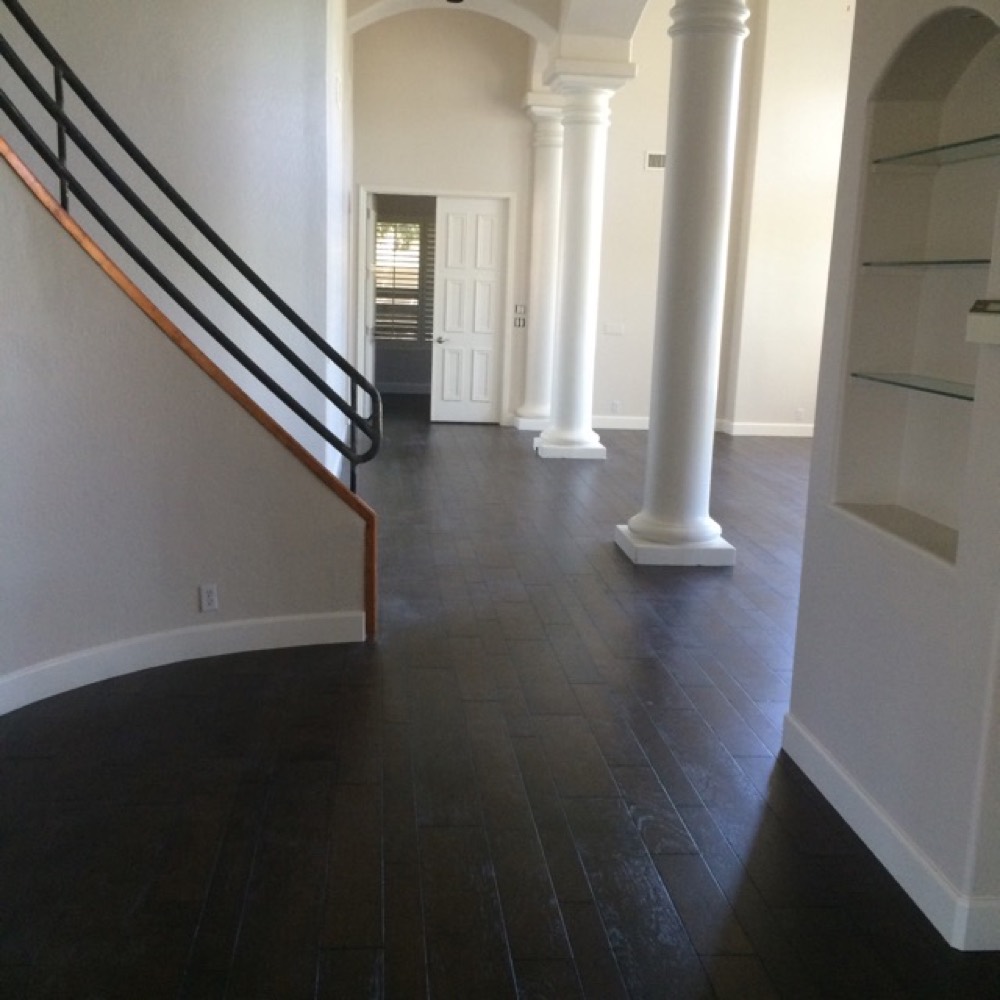
Phoenix houses sit on concrete slabs, and a great many of them were tiled from the front door to the back wall. When homeowners move to wood, that tile has to come up first - and how it is done decides how clean your house stays and how the new floor behaves.
Thinset is the real opponent
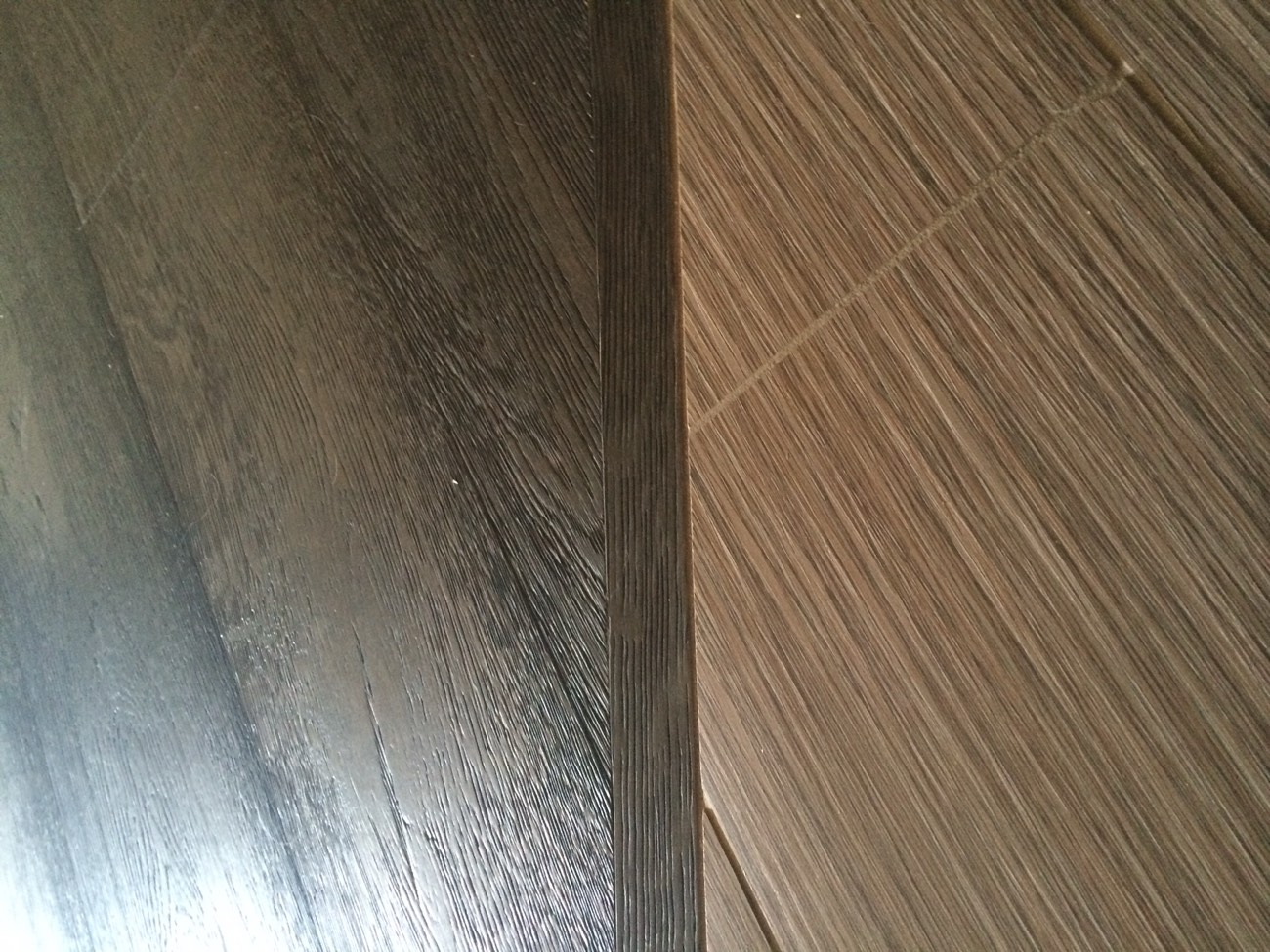
Tile is bonded to the slab with thinset mortar. Over the years, heat cycling, minor slab movement and old patch repairs leave a patchwork of bond strengths across a single room. Some tiles release with a tap. Others hold so hard that getting them off chips or gouges the concrete underneath.
Every one of those gouges is a repair before the new floor can be laid. This is why a tile removal quote that says nothing about the slab is a quote for half the job.
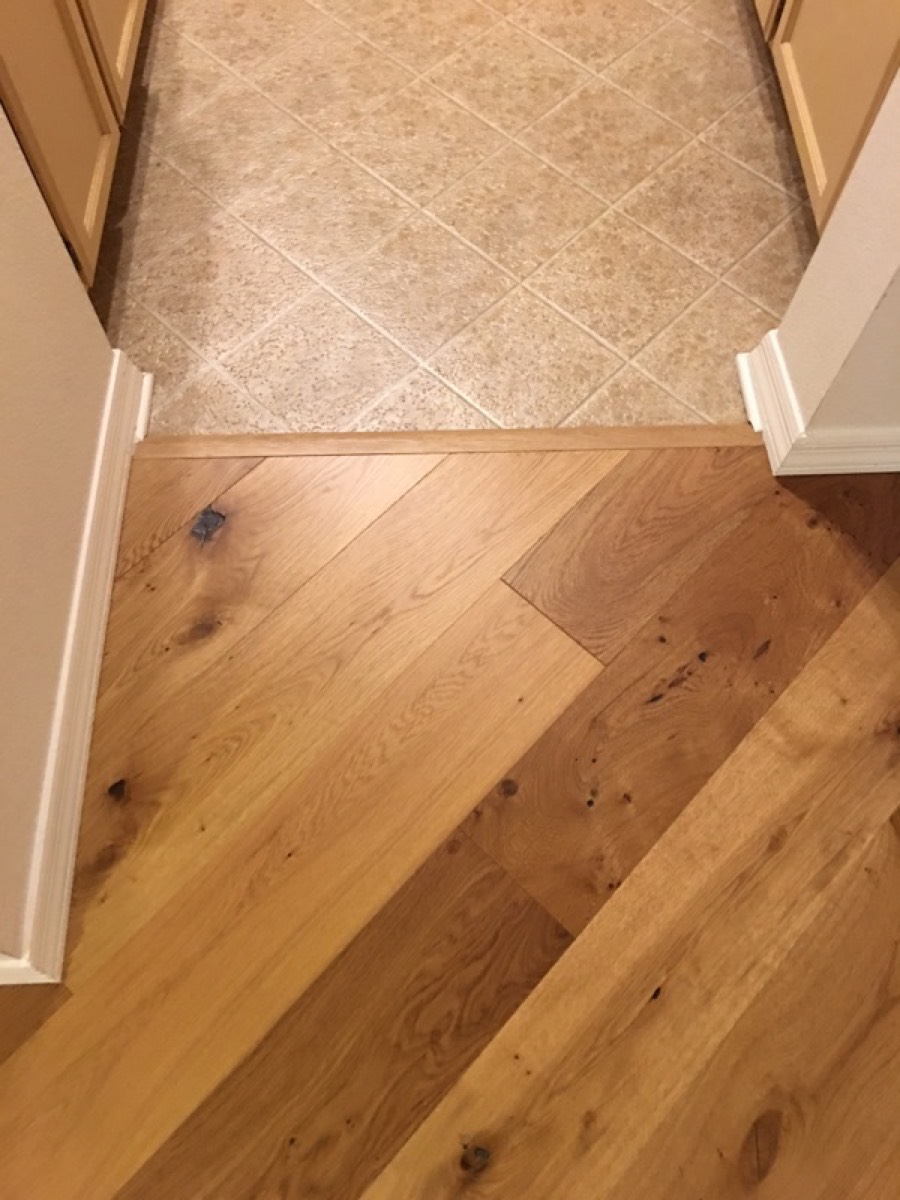
The honest answer
Does dustless tile removal actually work?
It is the question people ask most about dust-free tile removal, usually after somebody promised them zero dust and they found a gray film on the window sill.
What dust-free removal actually does
The dust is captured at the point it is created - vacuum-shrouded chisels and grinders running to vacuums with HEPA filtration - rather than being allowed into the room and cleaned up afterwards. Air-conditioning returns get sealed first, so nothing travels through the ducts into the rest of the house, and the work area is contained with plastic.
Why it is a health question, not a cleaning one
Grinding ceramic, porcelain and thinset releases fine crystalline silica. It stays airborne for hours, it reaches deep into the lungs, and it settles inside air ducts where it gets redistributed for weeks. Ordinary renovation dust is a cleaning problem. This one is not.
And what it is not
It is not magic. You will still see some dust in the work area. Anybody promising literally none is overselling, and you will notice the difference between the promise and the parapet. What the containment genuinely delivers is that it does not end up in the rest of your house - not in the kitchen cupboards, not in the bedroom, not in the ducts.
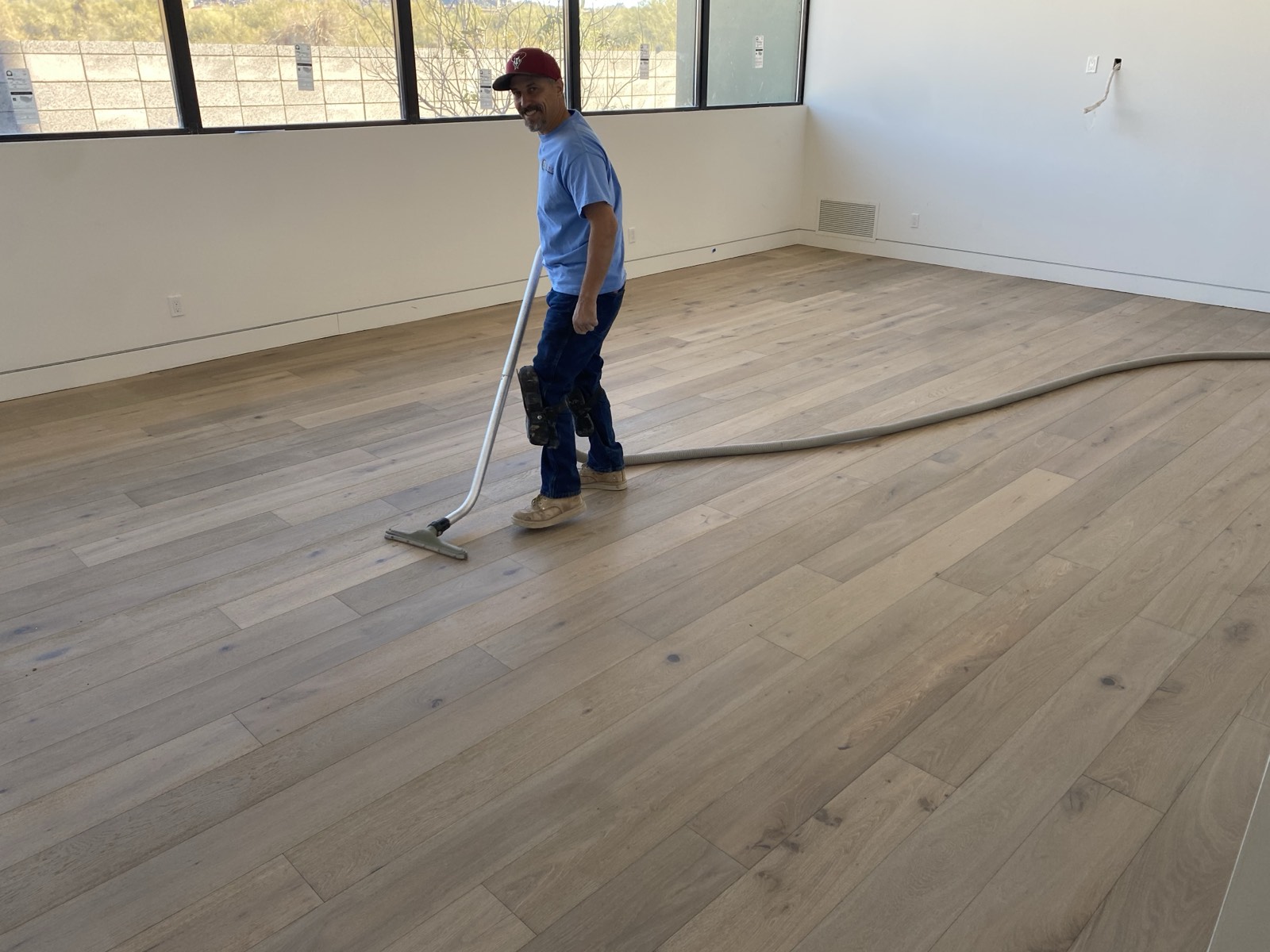
How we do it
Five stages on a dust-free tile removal in Phoenix, and the slab work at the end is the part that decides whether the next floor behaves.
Seal and protect
Work area sealed off from the rest of the house, HVAC returns covered, and anything staying in the room protected.
Lift the tile
Tile and stone come up on vacuum-shrouded equipment so the dust is captured where it is made rather than after it is airborne.
Grind the thinset back
The slower half of the job. Old mortar and adhesive have to come off the concrete completely, or the ridges left behind telegraph through the floor that follows.
Repair and flatten
Chips and gouges filled, high spots ground down, the whole floor brought inside the flatness tolerance the new floor needs - about 3/16 of an inch over 10 feet.
Clean, test, hand over
The slab is vacuumed clean and moisture-tested before a single board arrives. Same company, same standard - which is the point of not splitting this work between two contractors.
What comes up, and how hard it is
Not every floor fights back the same way. This is roughly what to expect, and where the hours and the cost go.
| Existing floor | What's involved |
|---|---|
| Ceramic & porcelain tile | The common case. Bond strength varies tile to tile, so the thinset grind is the bulk of the labor. |
| Natural stone & saltillo | Heavier, thicker and slower. Saltillo in particular tends to have been set in a deep mortar bed that all has to come off. |
| Glued-down wood | The slowest of the lot. The adhesive has to be removed from the concrete as well as the boards, and it does not release cleanly. |
| Carpet & laminate | The easy ones. Fast, strip and pad, and underlay comes out, the slab still gets checked and prepped. |
Tile now, wood next - one quote for both.
We price the removal, the slab work and the floor as one job, itemized, so you can see exactly which part costs what.
Budget
What moves the cost of tile removal
Square footage is the obvious cost driver, and the least interesting one. These four matter more:
What the tile is. Porcelain is harder than ceramic. Natural stone and saltillo are heavier and usually sit in a deeper mortar bed.
How the thinset is holding. The single biggest variable, and nobody can tell you for certain until the first tiles come up. A room where it releases cleanly and a room where it fights are different jobs at the same square footage.
How much slab repair is left behind. Gouges and chips from demolition are a separate cost line from the removal itself, and on an older Phoenix slab it can be a substantial one.
What is underneath. Occasionally there is a second layer nobody knew about. We would rather find it at the estimate than on the day.
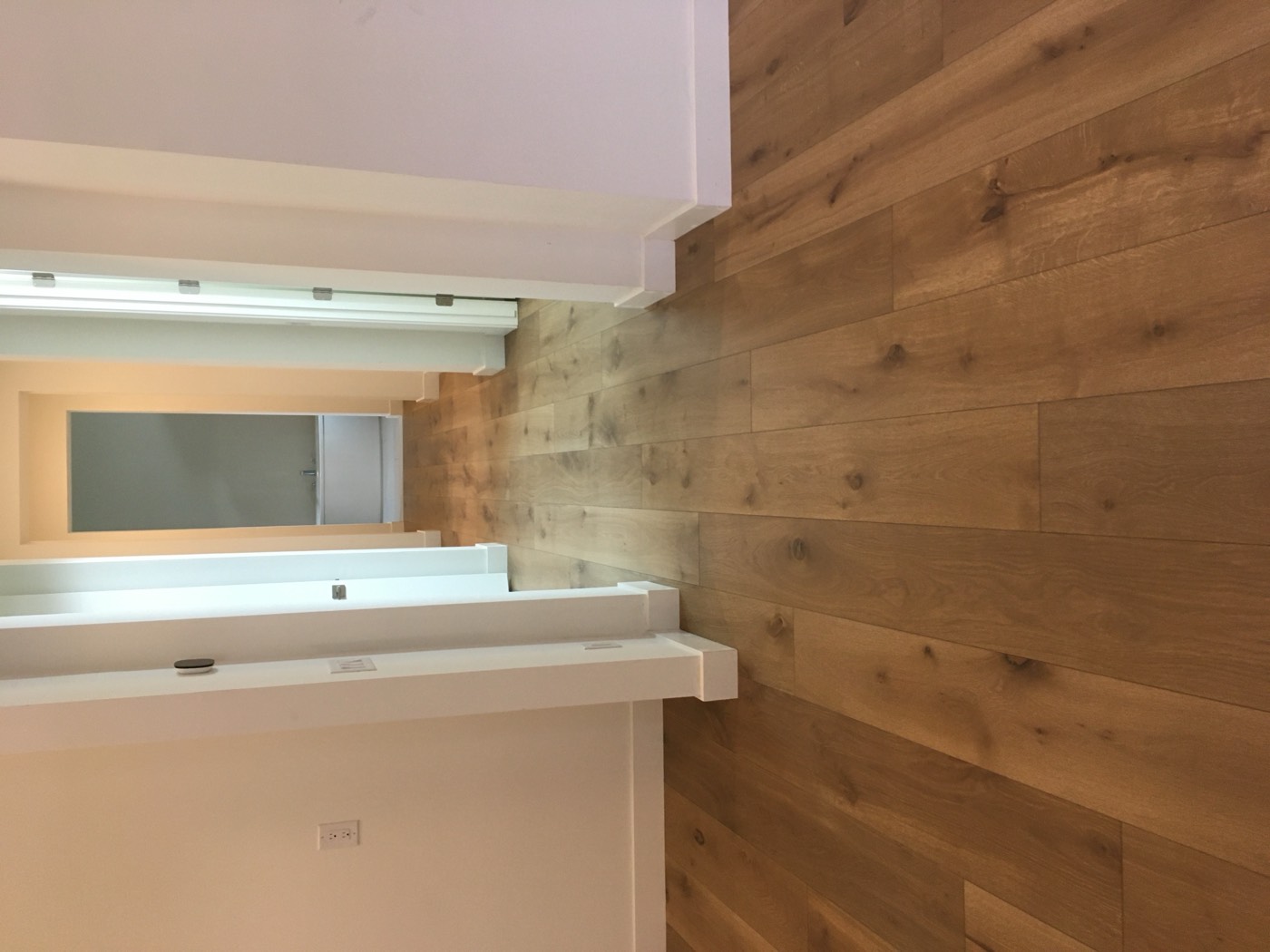
Olympic Hardwood Flooring removes tile across the Valley: Phoenix, Scottsdale, Paradise Valley, Arcadia, Peoria, Glendale, Chandler and Tempe. Showroom at 10801 N 24th Ave, Suite 112, Phoenix AZ 85029, Mon-Fri 9 AM-3 PM. Call or text (602) 535-1214.
Tile removal questions we get asked
How much does dustless tile removal cost?
Five things move it: the square footage, what the tile is made of, how hard the thinset is holding, how much slab repair the demolition leaves behind, and whether there is another layer of flooring underneath that nobody knew about. Porcelain over a well-bonded thinset bed is the slow end; ceramic that lifts cleanly is the fast end. We quote after looking at the floor, and the quote separates removal from slab preparation so you can see which one is doing the damage.
Does dustless tile removal really work?
Yes, with an honest caveat. The dust is captured at the point it is created - shrouded tools connected to vacuums with HEPA filtration - rather than being allowed into the room and cleaned up afterwards. That is what stops the fine silica dust traveling through the house and settling inside cabinets and air ducts. What it is not is a magic trick: you will still see some dust in the work area, and anybody promising you literally none is overselling. The measurable difference is that it does not end up in the rest of your house.
Why does tile dust matter more than other renovation dust?
Because of what it is. Grinding ceramic, porcelain and the thinset under them releases fine crystalline silica, which is small enough to stay airborne for hours and to reach deep into the lungs. It is also what settles into air-conditioning ducts and gets redistributed through the house for weeks afterwards. Ordinary construction dust is a cleaning problem; silica dust is a health one, and that is the reason the containment exists.
What happens to the slab underneath?
That is the real work. Tile is bonded to the slab with thinset mortar, and after years of heat, minor slab movement and old repairs, some tiles lift cleanly while others hold so hard that removing them chips the concrete. Every gouge has to be repaired and the slab ground or filled flat - roughly 3/16 inch over 10 feet - before hardwood can go down.
Can you remove tile and leave the slab for another contractor?
We can, but it is rarely the cheaper route. The slab is where the two jobs meet, and when the removal crew and the flooring crew work for different companies, a floor that later moves becomes an argument rather than a fix. We would rather quote the whole thing and own the result.
How long does tile removal take?
For a typical Phoenix room, removal itself is usually a day or two. The slab work afterwards is what varies: grinding, filling and repairing demolition damage on an older slab can take as long again. We tell you the split before we start, because it is the part people are surprised by.
What else do you remove besides tile?
Carpet, laminate, vinyl and glued-down wood. Glued-down wood over a slab is the slowest of all of them, because the adhesive has to come off the concrete too. Carpet is the fastest and the least dusty by a wide margin.
Do I need to move out during tile removal?
Usually not. We seal the work area and the air-conditioning returns, and the containment keeps the dust from traveling. What we do ask is that the rooms being worked on are empty and that pets are kept elsewhere for the day, because the equipment is loud.
Tile out, slab ready, floor down.
One company in Phoenix for all three, so the slab has an owner. Free estimate, measured in person and itemized in writing - removal cost and floor cost on separate lines.