
Refinishing & sanding
The floor you have is probably worth saving.
Hardwood floor refinishing brings an old floor back for a fraction of what replacing it costs. Sometimes it does not even need a full sand - and we will tell you when that is the case, before anyone quotes you for one.
First question: does it need sanding at all?
A tired-looking floor is not always a worn-out floor. Very often the wood is fine and only the finish is dull, and that is a much smaller job than a full sand. Half the hardwood floor refinishing inquiries we take in Phoenix end up here.
Three answers, not one
Clean and polish. The finish is intact, the floor is just dusty or hazed. No refinishing needed at all, and we will say so.
Screen and recoat. The finish is worn but not breached, and the wood underneath is untouched. We abrade the existing surface and lay a fresh coat over it. A fraction of the cost and the disruption of a full sand.
Full sand and finish. Wear has gone through to bare wood, there are deep scratches or stains, or you want to change color. Every grit pass, then stain, then coats.
We would rather sell you the smaller job
A screen-and-recoat costs a fraction of a full sand-and-finish, and on a floor that only needs one, the bigger job is money thrown away and a wear layer spent for nothing. We check before we quote.
Budget
What refinishing costs, and when it beats replacing
The honest comparison, because this is the decision most people are actually making when they call us about hardwood floor refinishing.
Four things drive the cost
1. How much finish has to come off. A recoat abrades the surface and costs a fraction of the alternative. A full sand takes the floor back to bare wood through a sequence of grits, and costs accordingly.
2. How flat the floor is. Cupped or crowned boards need more passes, and more passes spend more of the wear layer.
3. Whether the color changes. Stain adds a day, and a color change means the whole floor has to be taken back evenly - no shortcuts at the edges.
4. Edges, corners and stairs. The big machine does the middle of the room. Everything else is hand and detail sanding, and that is where the hours and the cost go.
Refinish or replace?
Refinishing wins on cost in almost every case where the floor is a candidate, and the arithmetic is not close. Replacing means paying for removal, disposal, new material and installation - and throwing away a floor that still had years in it.
A solid hardwood floor has enough thickness above the tongue for several full sandings across its life. An engineered floor with a sawn 3 mm wear layer will normally take one. That capacity is the whole reason a wood floor is worth buying in the first place, and using it is not a compromise - it is the plan.
The floor that cannot be saved is the one with a thin rotary-peeled veneer, or one that has already been sanded down to the tongue. We measure rather than guess.
The question everyone asks
Can you live in the house while it happens?
Usually yes. This is the thing people dread about hardwood floor refinishing, and it is exactly the thing a dustless system solves.
What dustless sanding really means
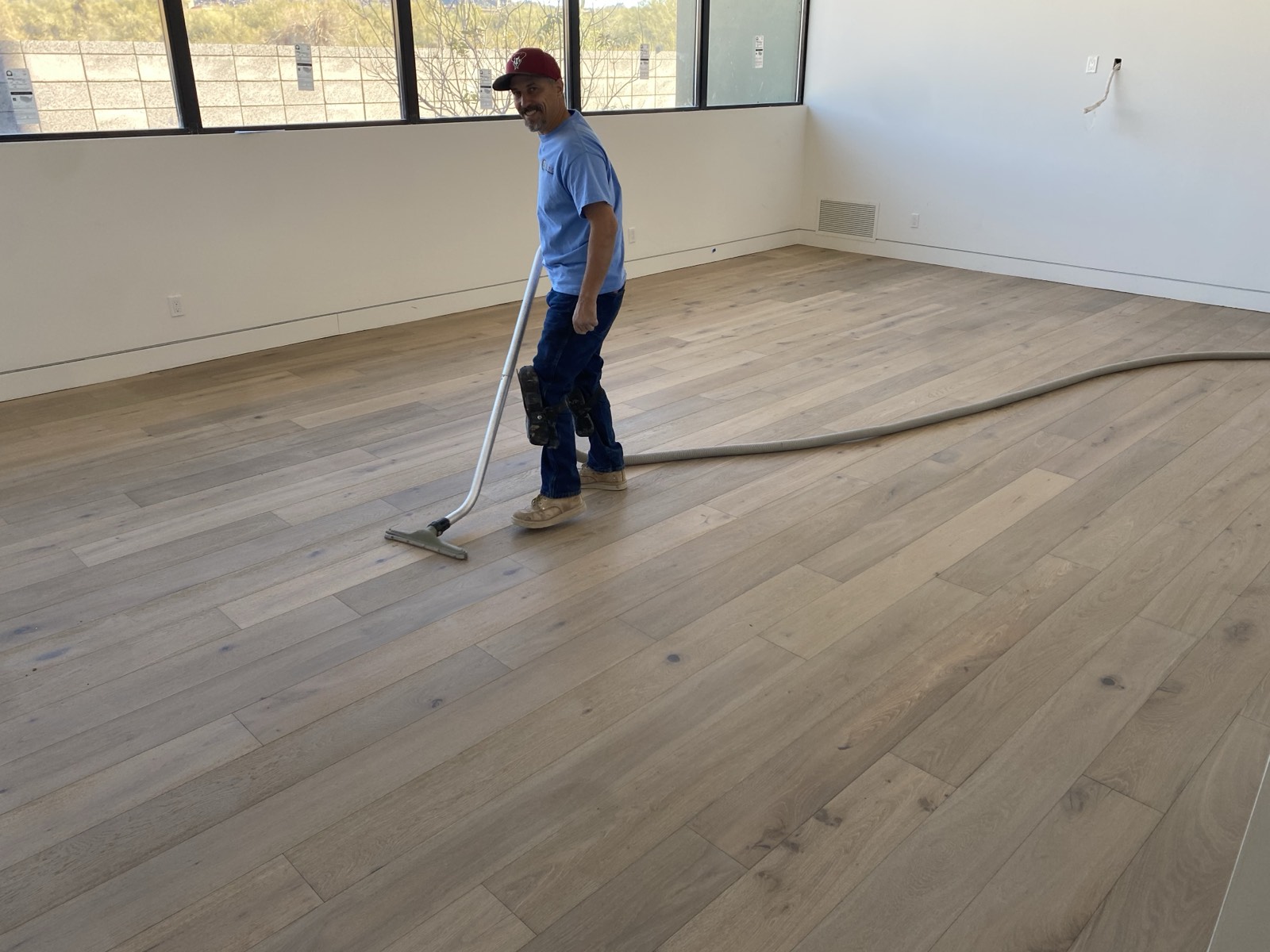
The dust is pulled at the machine, at the point it is made, rather than being allowed into the room and vacuumed up afterwards. That is the difference between genuinely dustless refinishing and a sand followed by a clean-up.
We seal the air-conditioning returns before anything starts, so nothing travels through the ducts into rooms we are not working in. Drapes and pictures get protected, doors come off, and the rooms that are not in play get taped off.
We will not promise you a house with no dust anywhere. Fine dust is fine dust. What we will promise is that it does not go through the whole house, and that you will not be cleaning it out of your kitchen cupboards in a month.
What you cannot do is walk on it
That is the real constraint, not the dust. A freshly coated floor needs time before feet, longer before rugs, and longer again before heavy furniture. We work in sections, and you get told which rooms are out of bounds on which days - along with both dates: walkable, and fully cured.
How a full sand-and-finish actually runs
Four stages on every dustless hardwood floor refinishing job in Phoenix. You know the schedule before we start, including which days you are out of which rooms.
Protect the house
Furniture out, doors off, drapes and pictures covered, air returns sealed, baseboards removed where the job calls for it.
Sand through the grits
Upright machine for the open floor, hand and detail sanders for edges, corners, under cabinets and stairs. Each pass removes the scratch pattern of the one before.
Stain, if you are changing color
Test patches on your own floor, in your own light, before the whole room is committed.
Build the finish
Coats with drying time between them, and a screen between coats to knock down anything that settled. Then walkable and cured dates in writing.
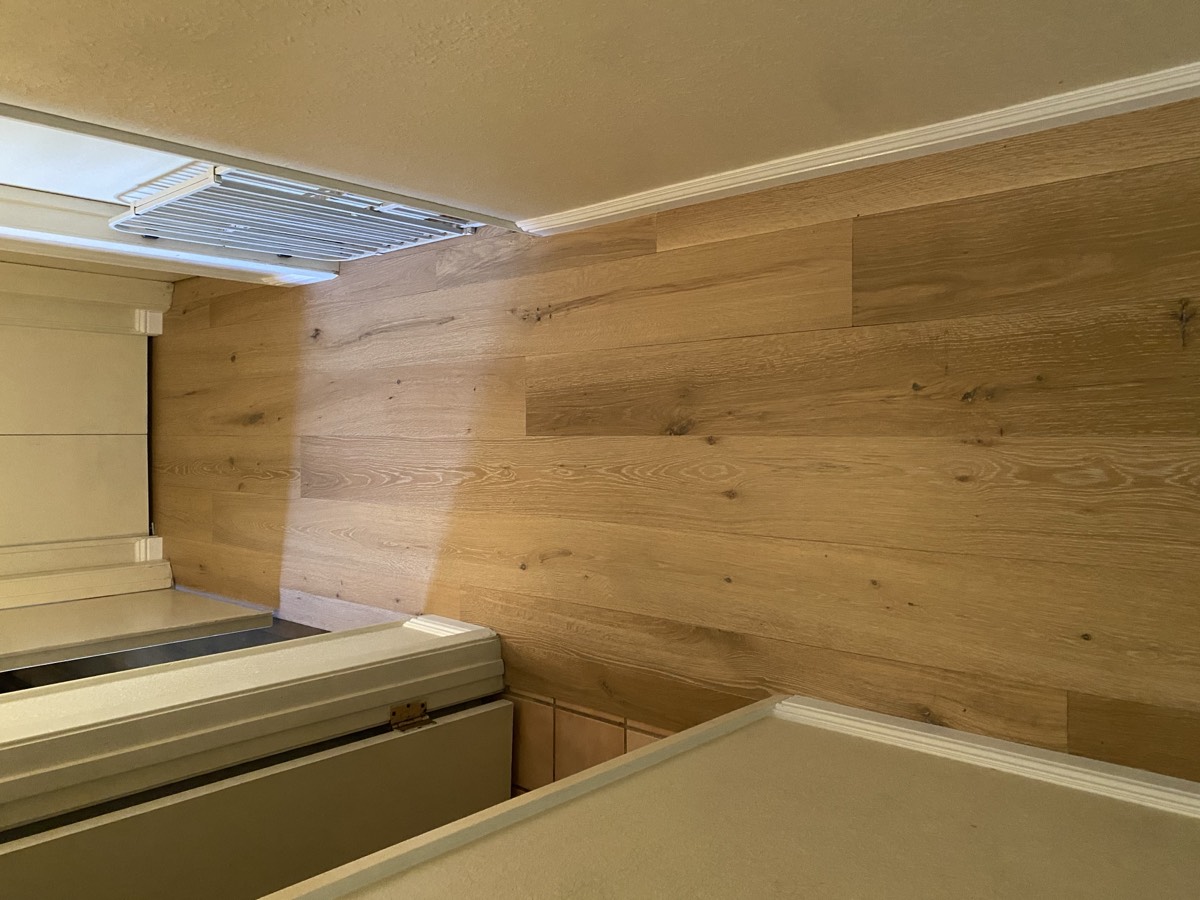
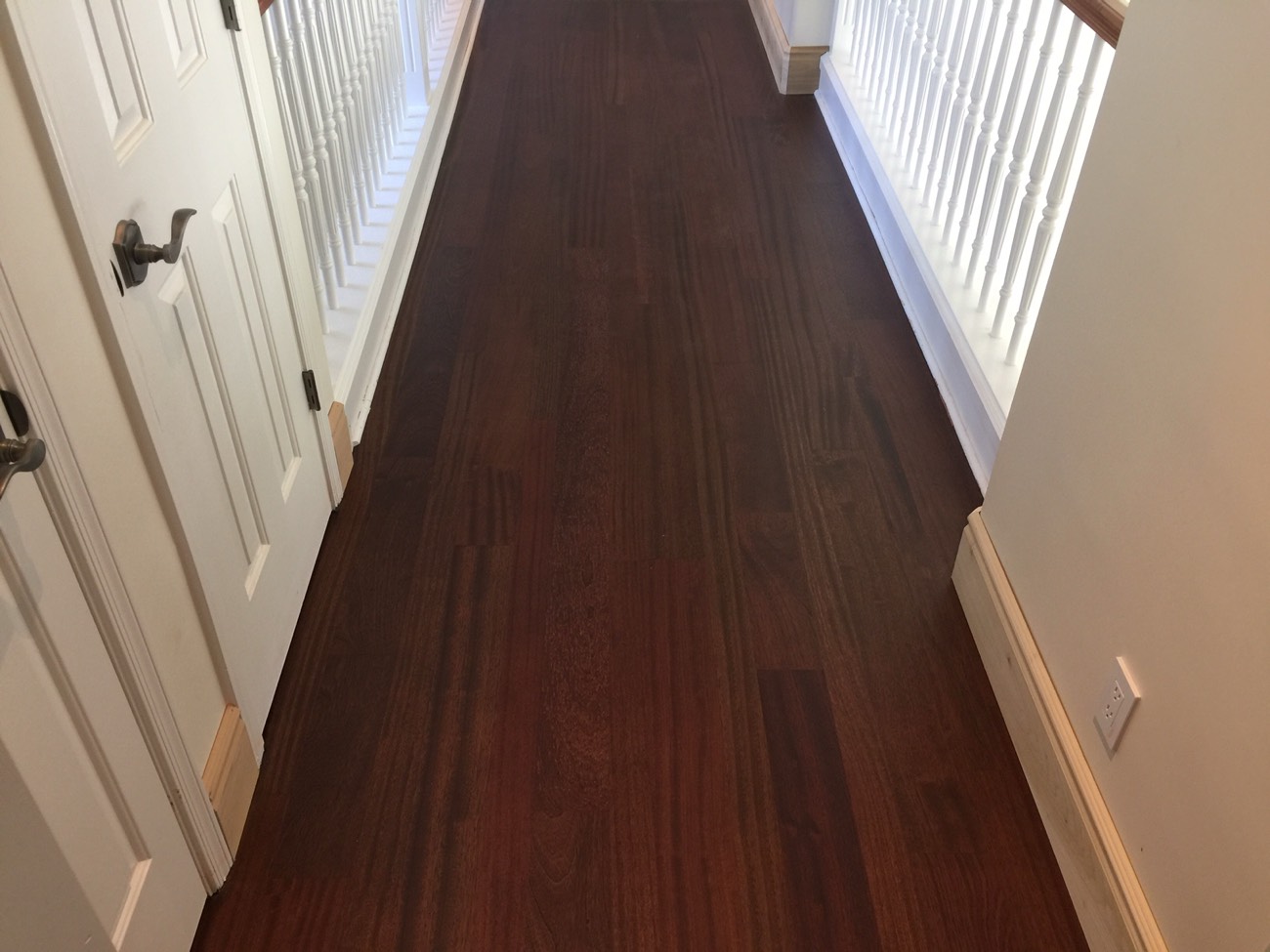
Send us a photo of the worst board.
It is usually enough for us to say whether you are looking at a recoat, a full sand, or a floor that needs replacing. No visit required to get that answer.
Choosing the finish
It decides how the floor looks, how it wears, and how you clean it for the next decade. In Phoenix, one of these choices matters far more than people expect.
Water-based or oil-modified
Water-based polyurethane stays clearest, cures fastest and is walkable soonest. It is the default for anyone who wants the wood color to stay where it is.
Oil-modified ambers gently with age into a warmer tone and takes longer to cure. On a floor you want to read warm, that shift is the point rather than a drawback.
Sheen matters more than the resin
Above roughly 50 percent gloss, a floor looks formal and shows every scuff and every speck of dust. Around 15 percent - low lustre - reads like an oil-rubbed European floor and forgives almost everything. Fine desert dust is exactly why low sheens dominate in Valley homes.
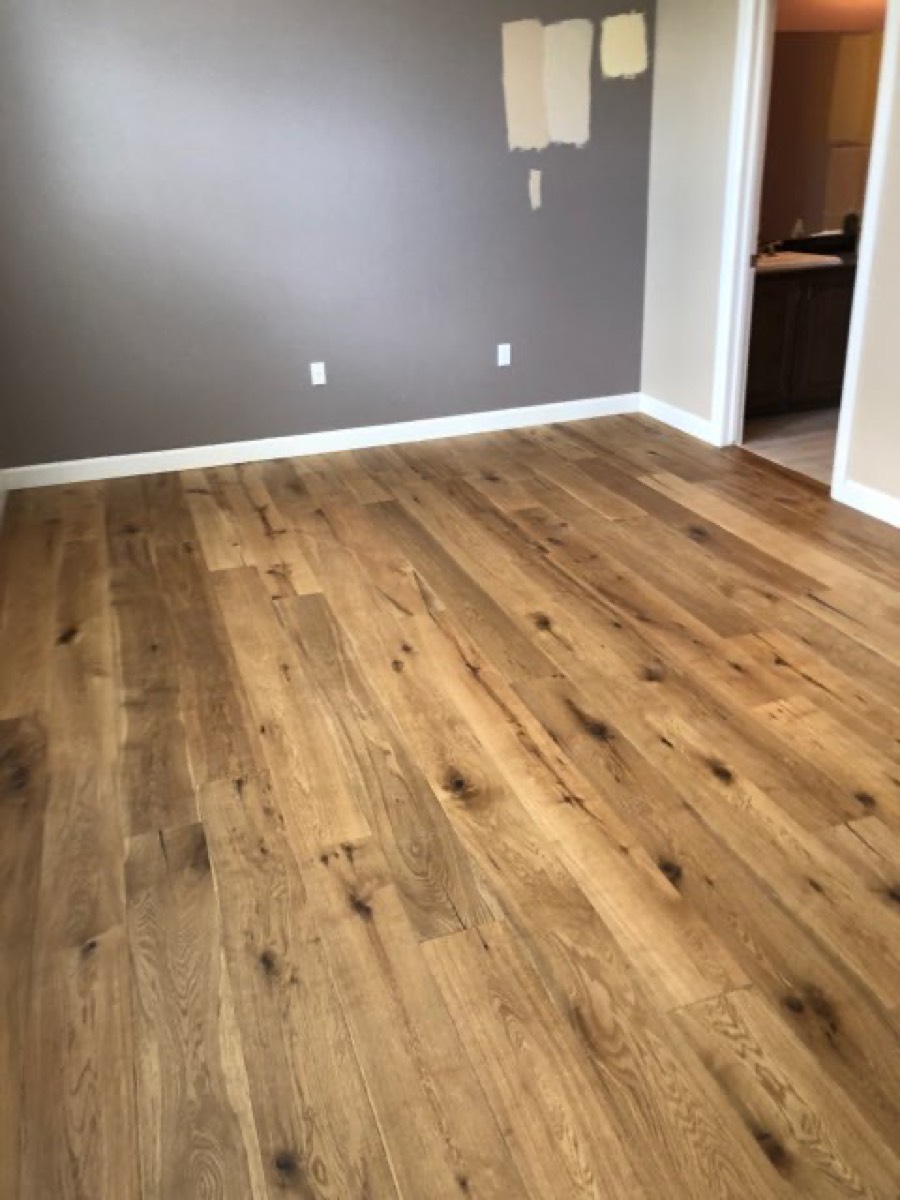
Refinishing in a desert climate. Two things are different in Phoenix. Finishes cure faster in dry air, which sounds helpful and means the window for laying a coat evenly is shorter. And fine abrasive grit wears a floor as a haze rather than as scratches, which is why sheen and texture do more for longevity in Phoenix than the hardness of the wood does.
Olympic Hardwood Flooring refinishes floors across the Valley: Phoenix, Scottsdale, Paradise Valley, Arcadia, Peoria, Glendale, Chandler and Tempe. Showroom at 10801 N 24th Ave, Suite 112, Phoenix AZ 85029, Mon-Fri 9 AM-3 PM. Call or text (602) 535-1214.
Refinishing questions we get asked
How much should it cost to refinish a hardwood floor?
It is driven by four things: how much of the old finish has to come off, how many grit passes the floor needs to come flat, whether you are changing color, and how much hand and detail work the edges, corners and stairs demand. A light screen-and-recoat is a fraction of a full sand-and-finish, and part of our job at the estimate is telling you which one your floor actually needs rather than selling you the bigger number.
Is it cheaper to refinish a wood floor or replace it?
Refinishing, in almost every case where the floor is a candidate. A solid hardwood floor can be sanded several times across its life, and an engineered floor with a 3 mm sawn wear layer will normally take one full sand. Replacing means paying for removal, disposal, new material and installation, and throwing away a floor that had years left. Refinishing is also the reason a hardwood floor is worth buying in the first place.
Can I stay in my house while the floors are refinished?
Usually yes, and this is the question we get asked most. We sand on a dust-containment system that pulls the dust at the machine rather than letting it into the house, we seal the air-conditioning returns so nothing travels through the ducts, and we tape off the rooms we are not working in. What you cannot do is walk on a freshly finished floor, so we work in sections and tell you which rooms are out of bounds on which days. Water-based finishes are walkable soonest; oil-modified needs longer.
How long does it take to refinish 1000 square feet of hardwood floors?
For a straightforward 1,000 square foot floor, plan on roughly three to five days: a day of preparation and sanding passes, a day for stain if you are changing color, then coats of finish with drying time between them. Cure time runs longer than dry time - the floor is walkable well before it is ready for rugs and furniture, and we tell you both dates.
Does my floor need a full sand, or just a recoat?
If the damage is in the finish rather than the wood, a screen-and-recoat is enough: we abrade the existing surface and lay a fresh coat over it. If the wear has gone through to bare wood, if there are deep scratches or pet stains, or if you want to change color, it needs a full sand. We check this before quoting, and we say so when a recoat is all you need.
Can engineered hardwood be refinished?
It depends on the wear layer. A sawn layer of 3 mm or more will normally take one full sand or a couple of light ones. A thin rotary-peeled veneer will not, and sanding it goes straight through to the core. Older advice that engineered floors can never be sanded is simply out of date - the number in millimetres decides it.
What finish will you use?
Your choice, and we explain the trade-off. Water-based polyurethane stays clearest, cures fastest and is walkable soonest. Oil-modified ambers gently into a warmer tone and takes longer. Sheen matters more than people expect: in Phoenix, low lustre around 15 percent hides fine desert dust far better than a gloss floor.
Do you move the furniture?
Yes. We also take doors off, protect drapes and pictures, and seal the air returns before anything starts. Baseboards and shoe molding come off when the job calls for it and go back afterwards.
How often can a floor be refinished?
A solid hardwood floor has enough thickness above the tongue for several full sandings across its life, so every seven to ten years is realistic in a normal household. Screen-and-recoats sit in between and cost far less, and doing them on schedule is what pushes the next full sand further out.
Do you refinish stairs?
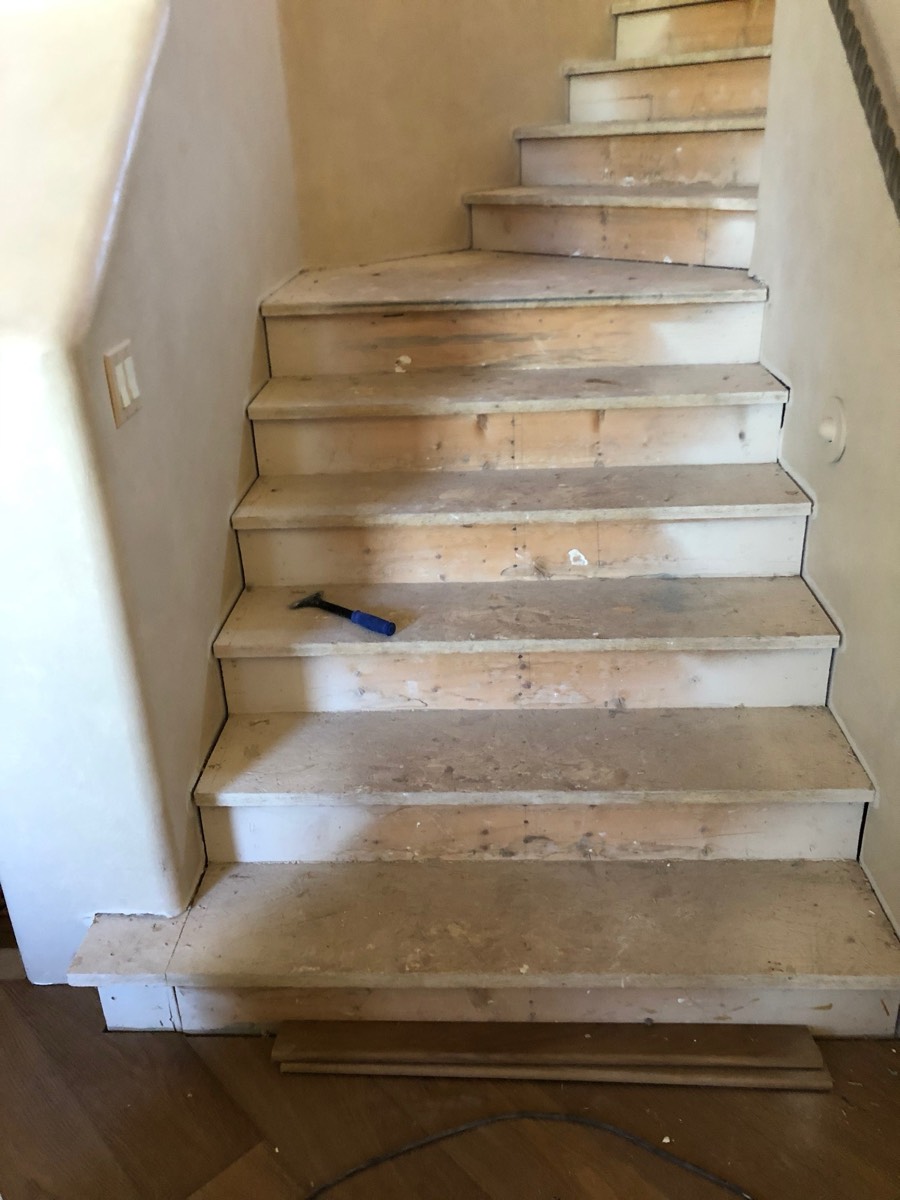
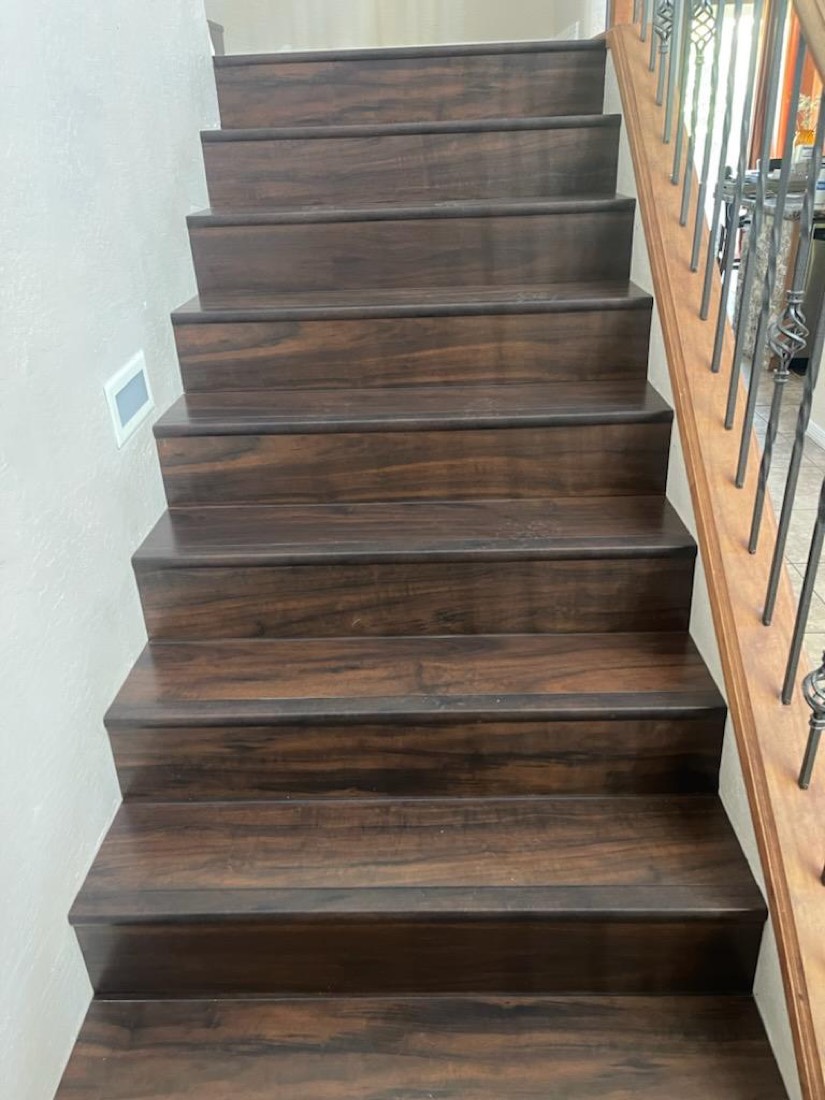
Yes, including curved and open-sided staircases. Treads, risers and nosings each need different handling, and most of the work there is done with hand and detail sanders rather than a big machine.
Most floors are worth saving.
Send a photo, or let us look at it in person in Phoenix. Either way you get a straight answer about whether it needs a recoat, a full sand, or nothing at all - and what it will cost.