Showroom: 10801 N 24th Ave #112, Phoenix Walk-ins welcome Mon-Fri 9 AM-3 PM After hours by appointment

Hardwood floors & brands

A hardwood flooring store you can walk into.

Fifty makers on one wall in north Phoenix. Engineered and solid, white oak through smoked French oak, strip widths through nine-inch plank. Every sample here is one you can pick up, carry to the window and take home before you decide - no appointment, no deposit, no pitch.

The brands on our wall

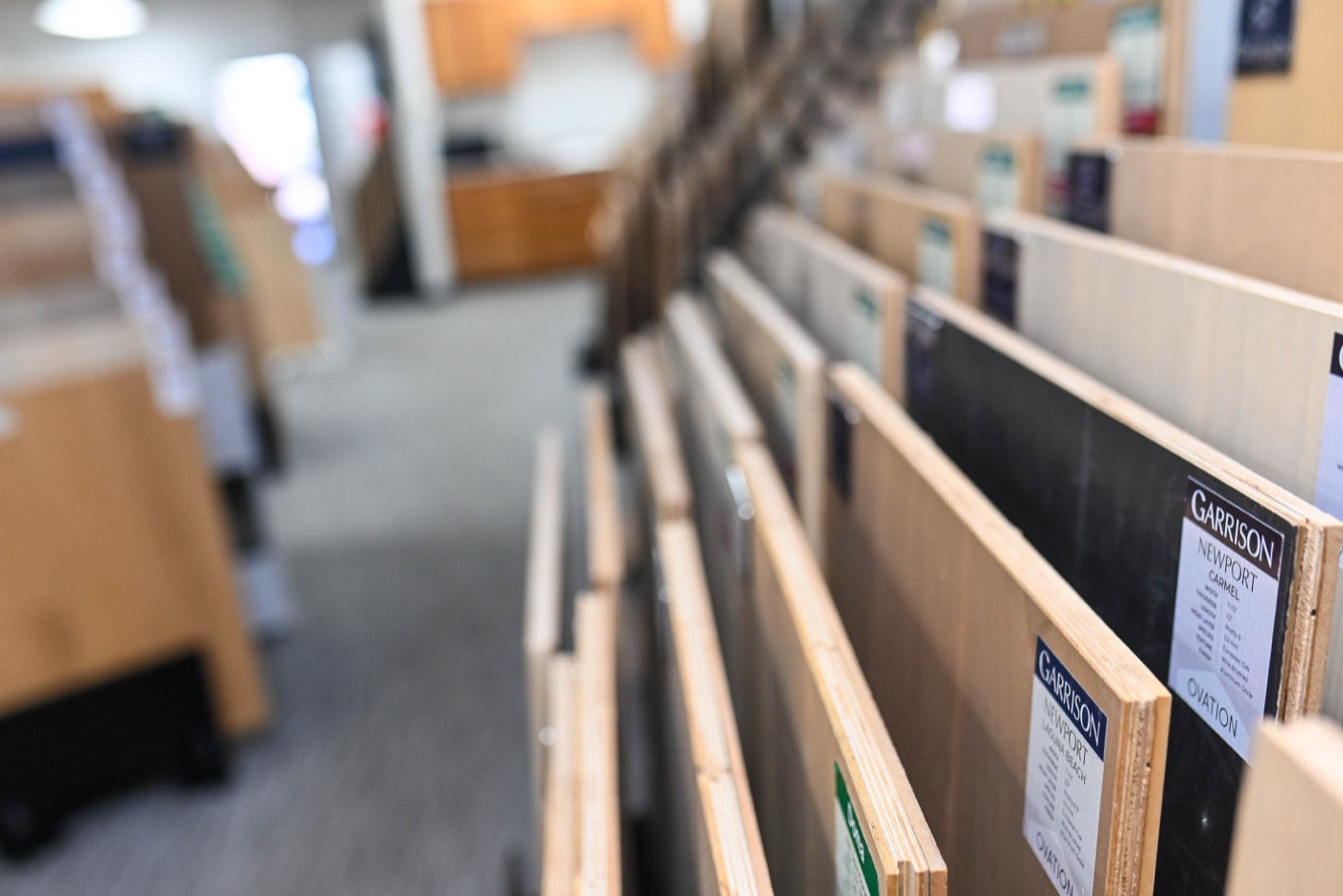
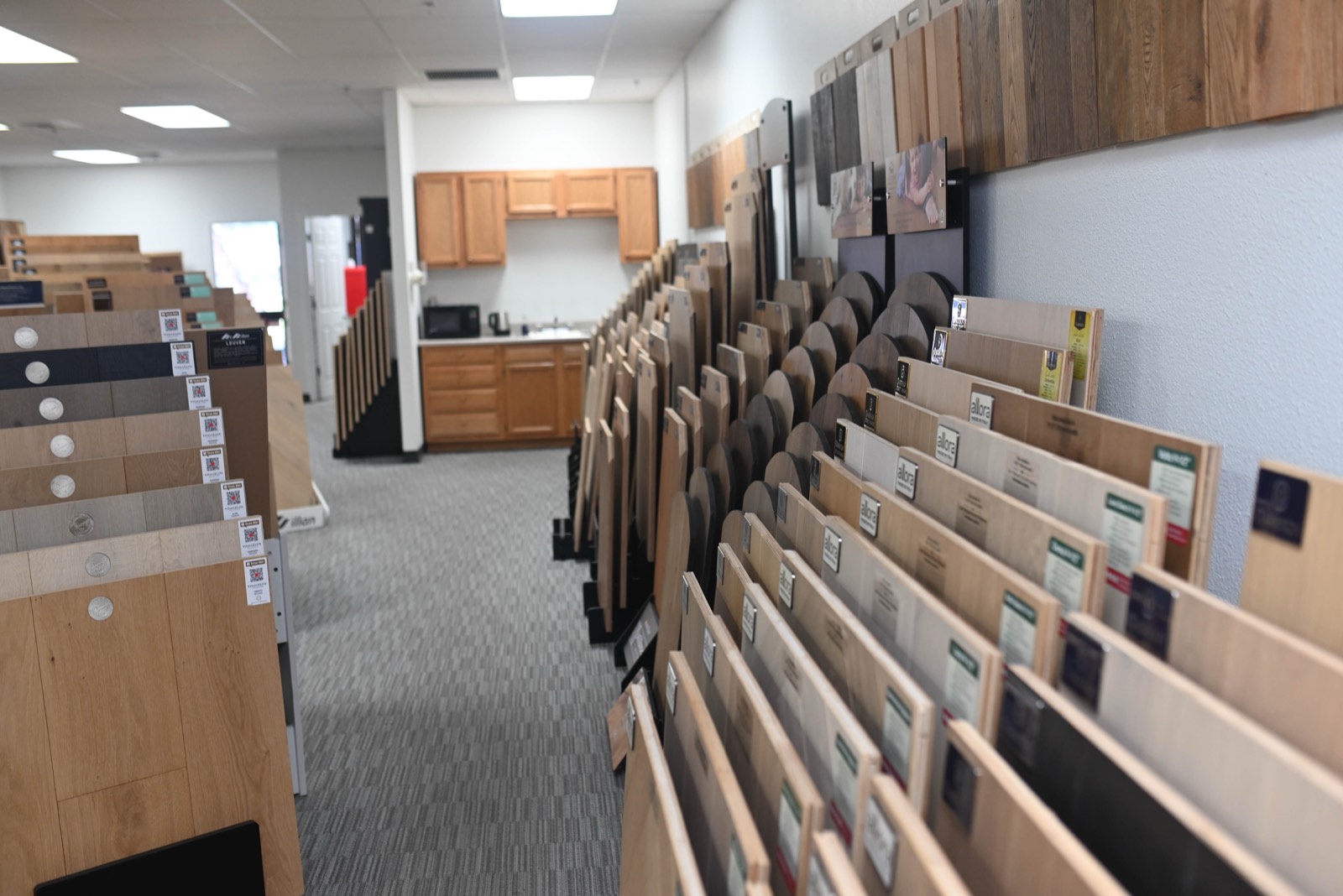
Around fifty makers, side by side, in one room. Not a catalogue you flip through - boards you pick up, carry to the window and take home.

Naturally Aged FlooringFrench oak, our core line
DuChâteauEuropean oak, two grades
Provenza FloorsColor & hand-crafted detail
Hallmark FloorsNovella, Alta Vista, Monterey
FabricaFine wood flooring
Pavilion ManorWide plank engineered
ChêneFrench oak
Villa CaprisiItalian-made
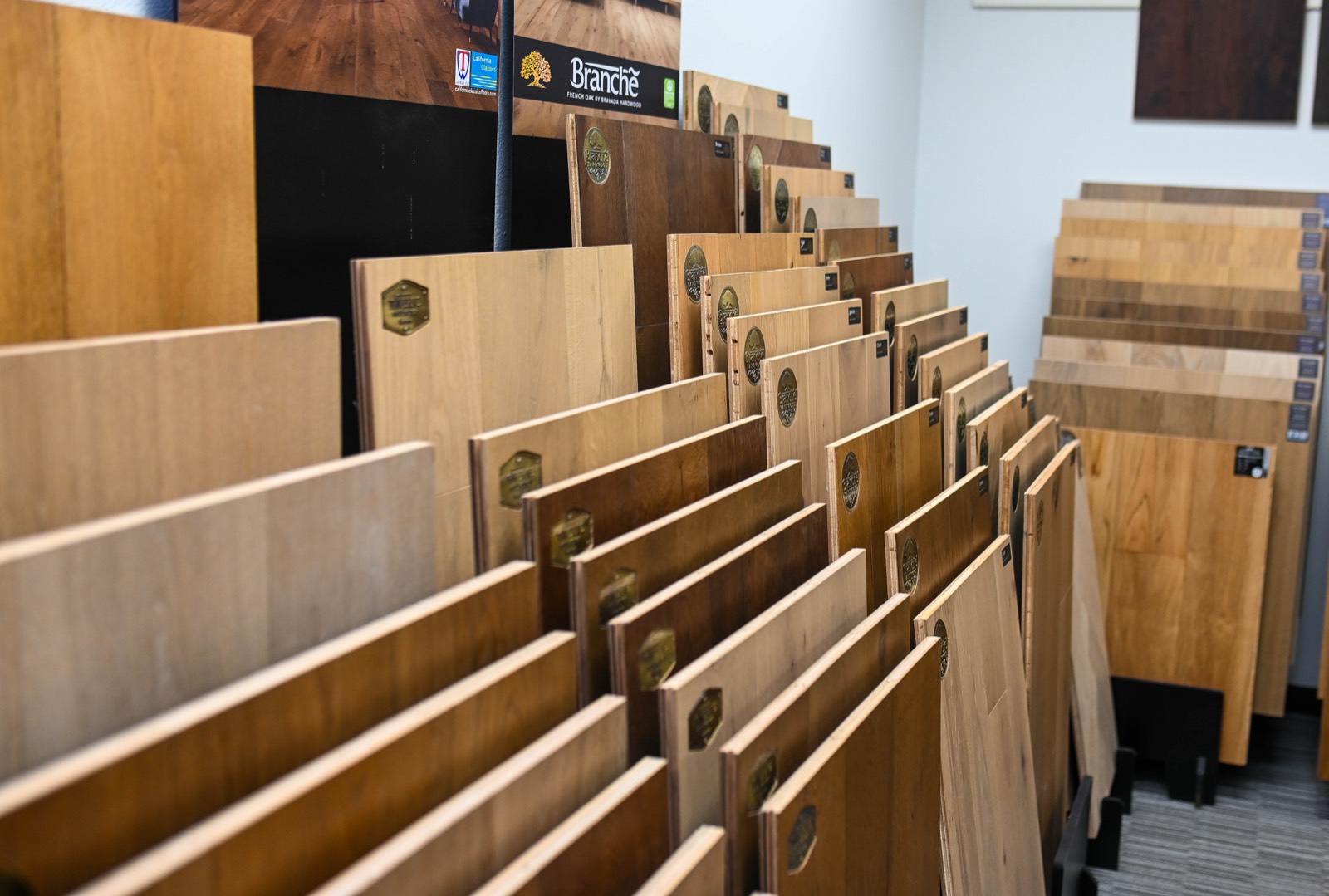
BranchéFrench oak by Bravada
Bravada HardwoodTaverne & rustic collections
The Garrison CollectionEngineered oak
Mission CollectionWire-brushed oak
California ClassicsMediterranean & Carmel
Brentwood HillsEngineered plank
From The ForestDomestic hardwood
RivafloorsEuropean oak
The GuildCharacter grades
GrayneWide plank
CoreTecWaterproof plank
FriendlywallWalls & ceilings
…and more in storeCome and see the wall →

Ranges rotate and collections change, so treat this as a starting point rather than a stock list. If you have seen a specific collection online, call before you drive over and we will tell you whether it is on the wall or has to come in.

The one most people choose

White oak: why almost every floor we sell starts here

Ask for a wood floor in Phoenix and you will be shown white oak, probably three times before anyone mentions anything else. That is not laziness on the part of the trade. It is the species that solves the most problems at once.

It is not the same tree as red oak

Red oak has an open, busy cathedral figure and a pink undertone that fights almost every modern paint color. White oak runs straighter and quieter, and its undertone is neutral, so it sits under grays, greiges, warm whites and black cabinetry without arguing with any of them.

The cell structure is different too: white oak's pores are closed with tyloses, which is why it was used for barrels and why it takes a stain far more evenly. Red oak blotches. White oak does not.

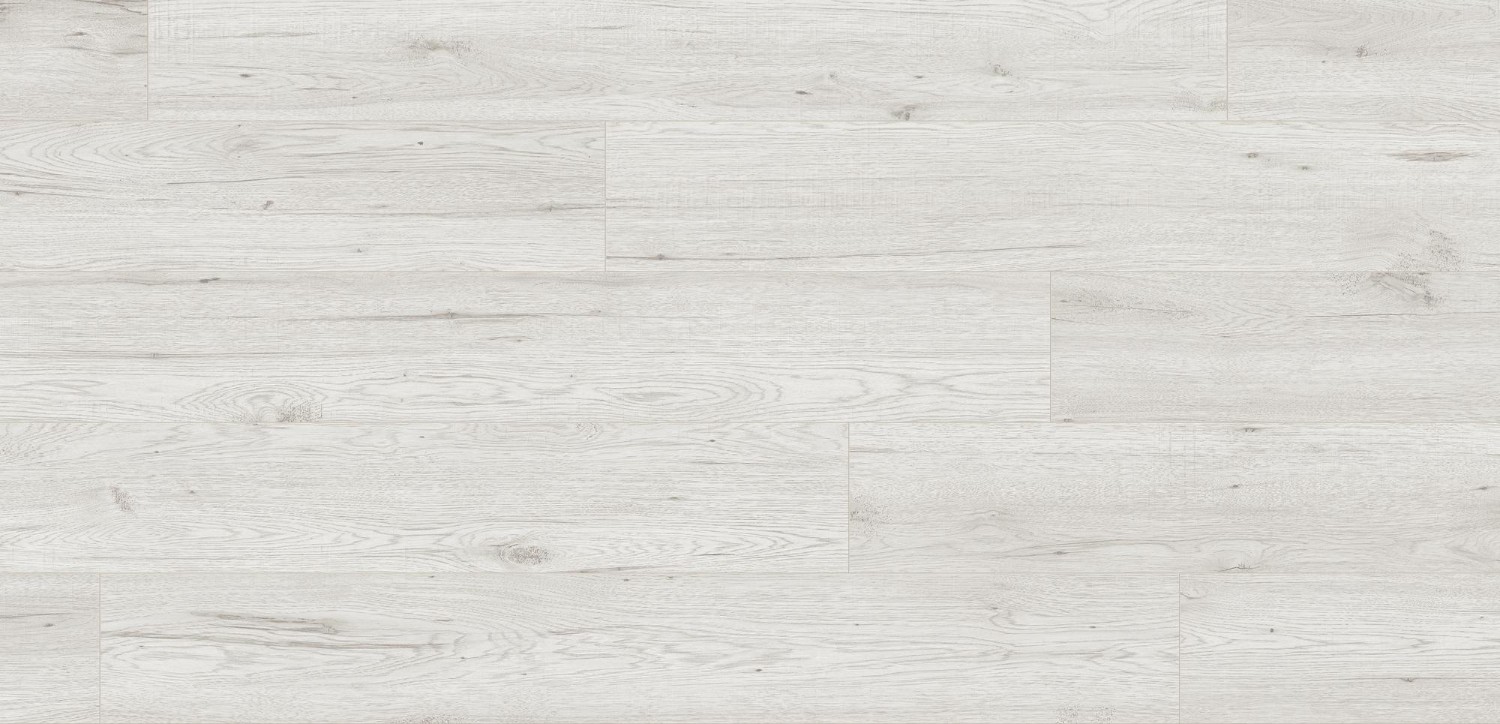
Pale white oak floor laid in long planks, showing calm straight grain and soft knots
White oak in a pale, barely-there finish. The grain is quiet enough to sit under anything.

It hides what desert dust does

Fine abrasive grit is the thing that actually wears a floor in the Valley, and it does it as a haze across the surface rather than as scratches you can point to. Open, medium-figured grain breaks that haze up.

Tight, uniform species like maple give it nowhere to hide, which is why a maple floor can look tired in five years while an oak floor next door still reads well.

Close view of wire-brushed white oak boards showing raised grain
Wire-brushed: the grain is raised, not sanded flat.

It takes a dark stain without looking like a mistake

This is where most of the regret in this business happens. A client wants a deep walnut-brown floor, picks a species that blotches, and ends up with a floor that looks patchy in raking afternoon light.

White oak holds a dark stain evenly, and it is the reason nearly every fumed, smoked and espresso floor you have admired started as white oak.

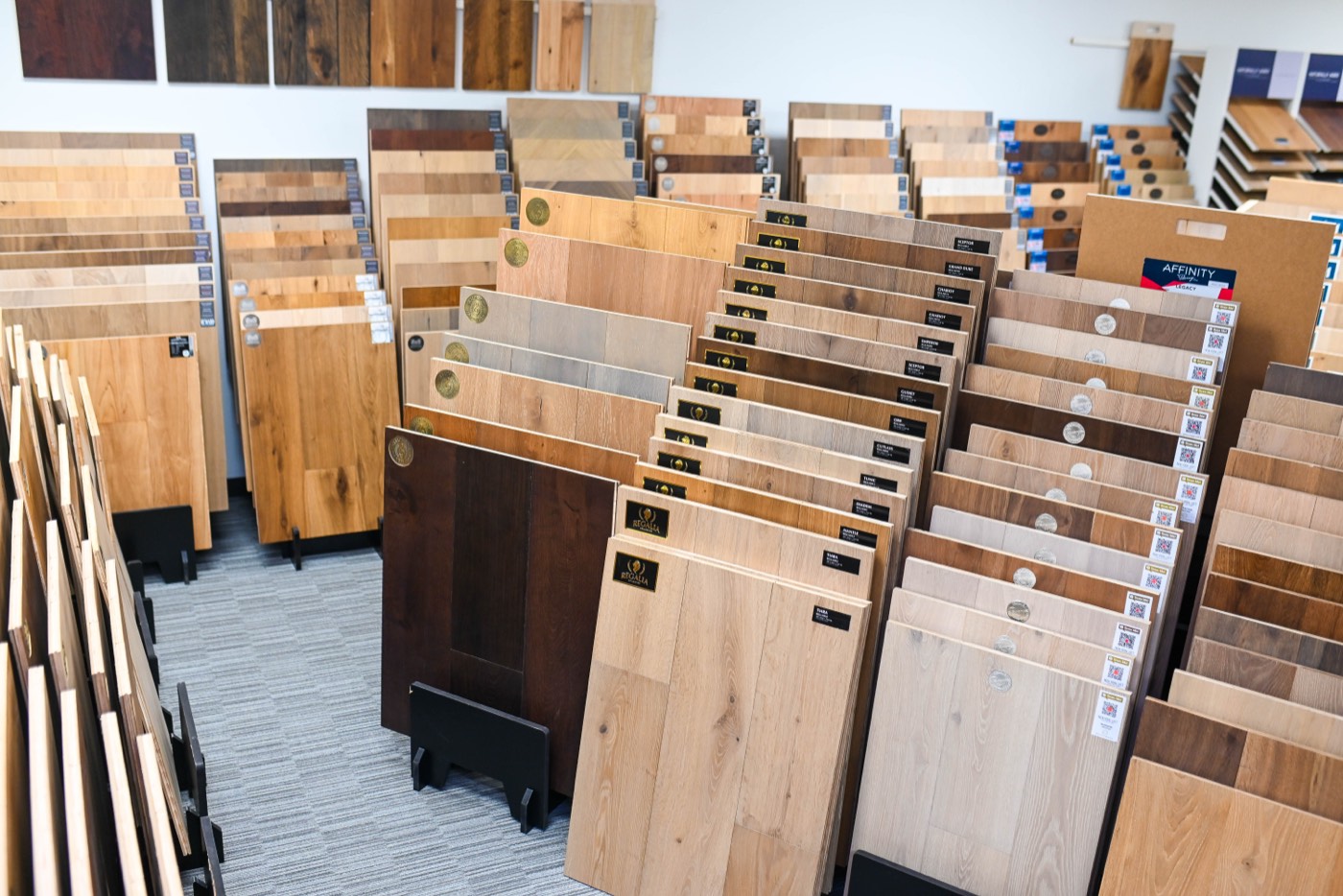
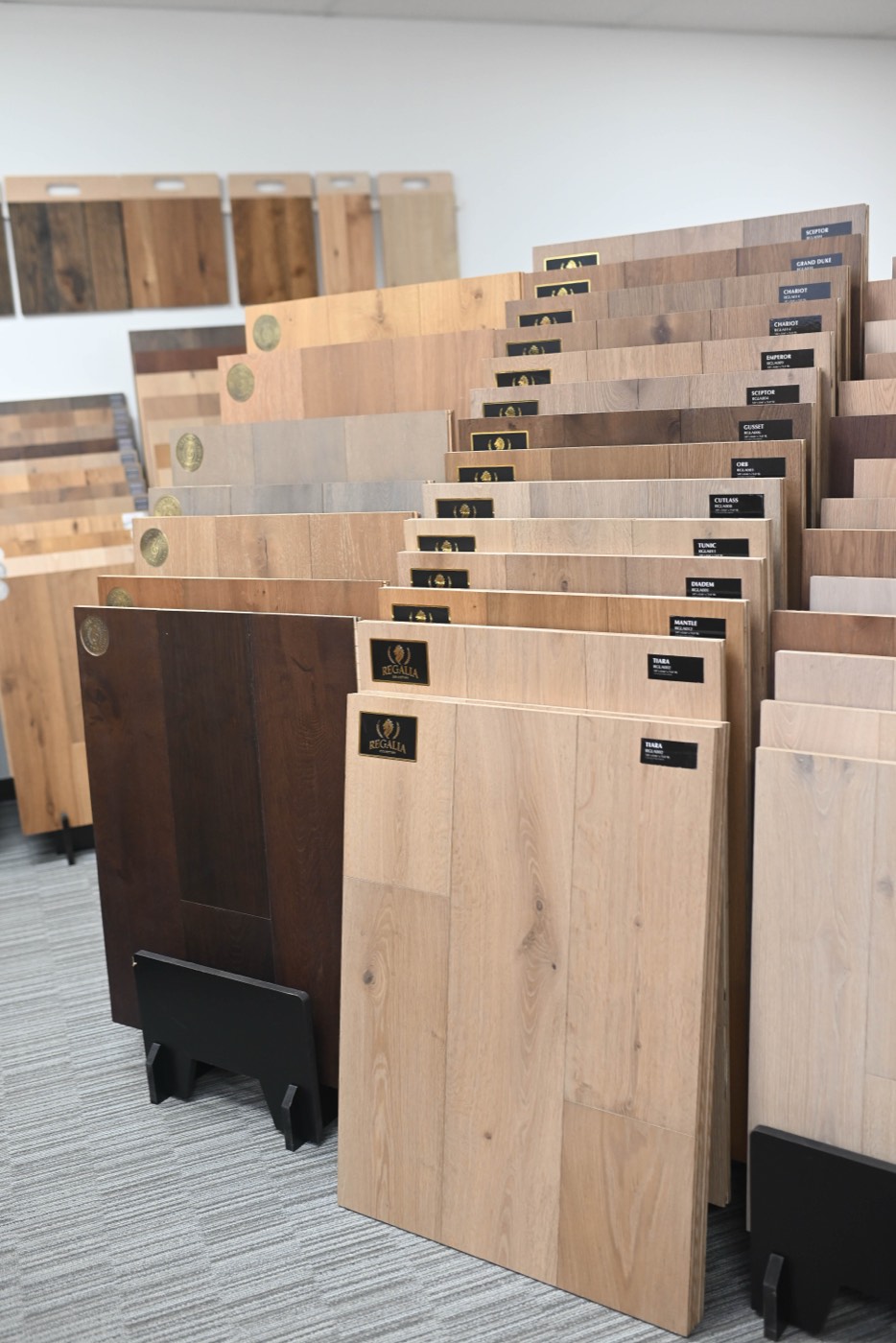
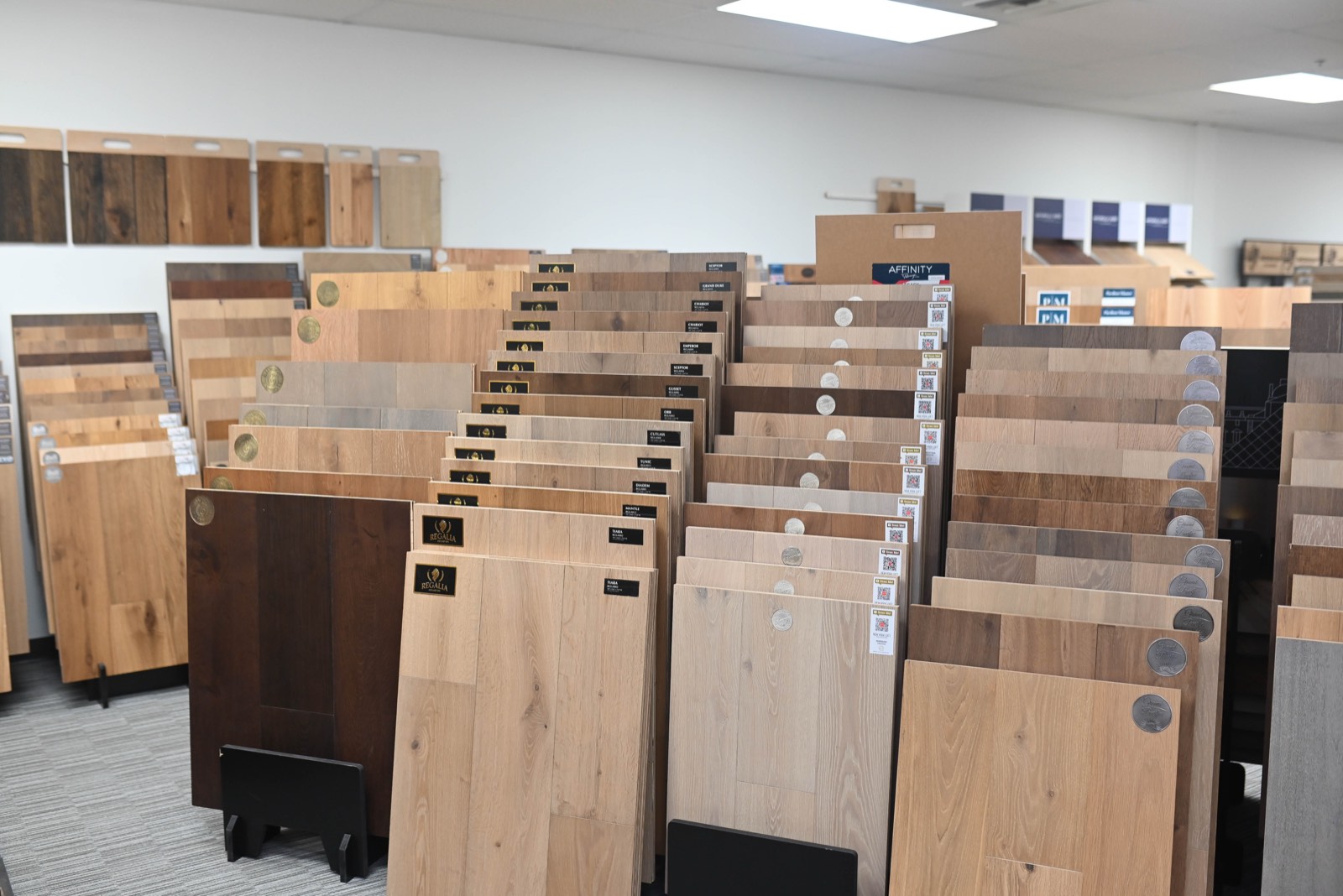
Rack of hardwood samples in the Phoenix flooring store showing pale through smoked tones
Pale natural through smoked, in one frame and one light.

The catch, and we would rather say it up front

White oak is not the hardest wood on the Janka scale - hickory and maple both test higher. Hardness resists dents; grain pattern hides wear. They are different problems, and in a house with dogs and desert dust the second one matters more. If you genuinely need maximum dent resistance, say so and we will show you hickory instead.

On our wall white oak runs from pale, barely-finished natural through wire-brushed mid-tones to smoked and fumed. Most of it is engineered, because most Phoenix homes sit on a slab. All of it is standing up in full plank width, not clipped into two-inch chips - you cannot judge grain from a chip.

Our specialty

French oak

European oak, cut and graded by a different philosophy from the American mills - and the reason most of what leaves this store is French.

Graded for character, not against it

It's European oak - Quercus robur and Quercus petraea - and the difference from American oak is as much about milling philosophy as about the tree. European mills cut for length and width, and they grade for character rather than removing it, so the floor keeps its knots, mineral streaks and board-to-board color variation.

Wide French oak sample boards standing full width in a rack at the Phoenix flooring store
Full plank width on the wall, not a two-inch chip.

Why it works in a Phoenix house

The construction fits the slab. French oak arrives engineered almost without exception - a sawn oak wear layer over a cross-grained core. That is precisely the build a slab-on-grade home running air conditioning nine months a year needs.

The color fits the light. Arizona sun ambers finishes and fades pigment faster than milder climates do. Pale, natural-toned oak at a low sheen drifts far less visibly than a dark stain, so the difference between a traffic lane and the shaded patch under a rug stays subtle instead of becoming a rectangle.

Pale and mid-tone French oak sample boards displayed side by side
Pale natural through to smoked, in the same frame and the same light.

What's on our wall. The core of it is 7½-inch wide plank with a sawn 3 mm wear layer, lightly wire-brushed, finished with UV-cured polyurethane, across a range of colors and character grades. No site finishing, no maintenance ritual - and because the wear layer is genuinely thick, the floor can be sanded later in life rather than replaced.

Character grade is a choice, not a defect

The first time people see aged-character European oak, the knots and streaks can read as flaws. They are the reason the floor looks like wood rather than like a product. If you want uniformity, select grade exists and we will show you both - just make that call standing on samples, not from photographs.

Half the seams

Wide plank

Seven inches and up. The single change that does most to make a room read calmer and larger.

What width actually does to a room

Put a 3¼-inch strip floor and a 7½-inch plank floor side by side and the difference isn't subtle. The strip floor draws a line every three inches and your eye stops at each one. The wide floor draws one every seven and a half, so the eye keeps traveling.

It is why wide plank works so well in the open-plan Valley homes that run kitchen into dining into living room with no wall in between. One continuous surface across all of it holds the space together.

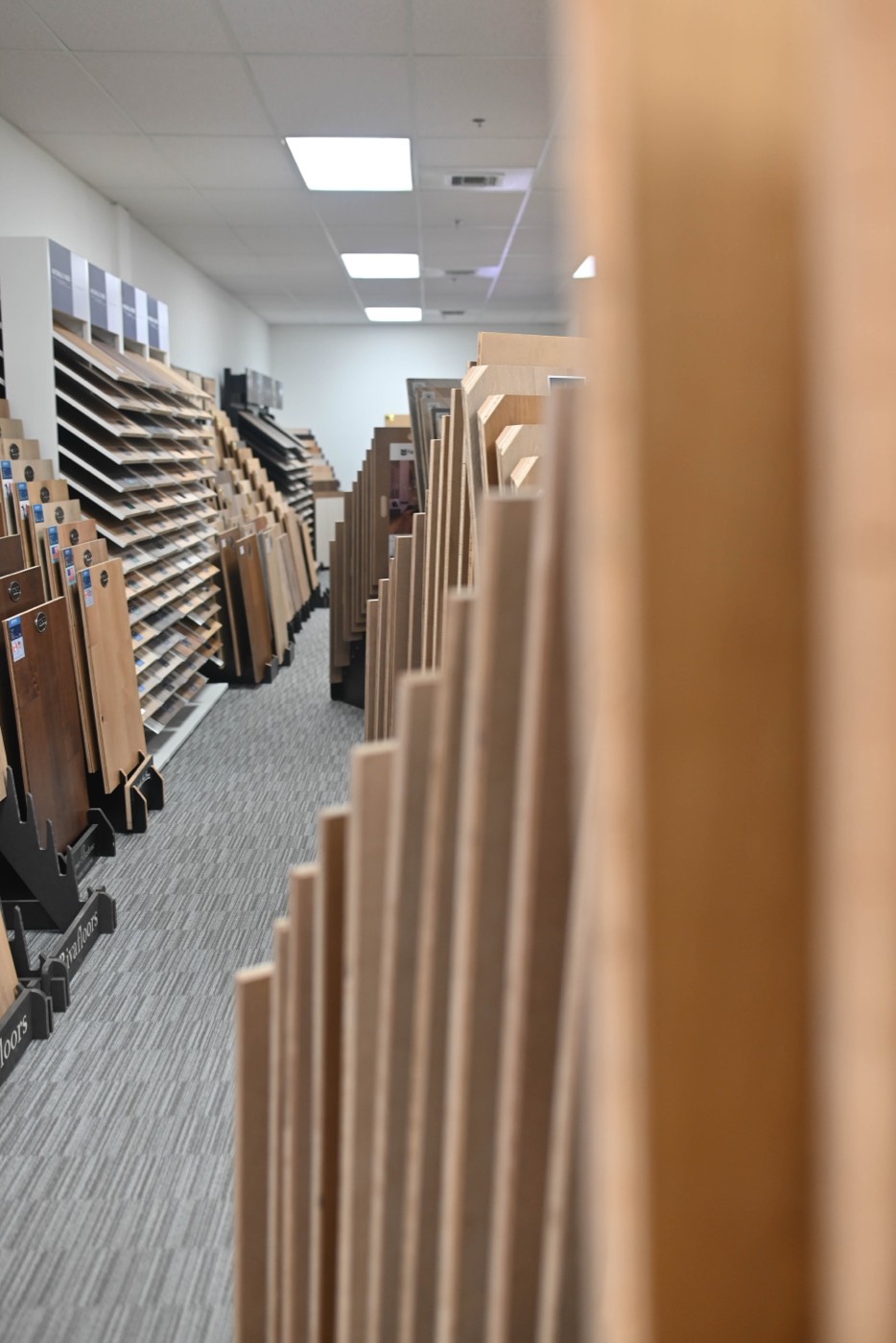
Tall racks of long wide plank boards in the aisle of the Phoenix flooring store
Long boards mean fewer end joints - the thing that makes an expensive floor photograph well.

Why it has to be engineered here. Wood moves across its width, not along its length. That is fine on a 3-inch board; on a 7½-inch board the same percentage of movement is more than twice the distance. In a Phoenix home - concrete slab, air conditioning most of the year, indoor humidity into single digits - a wide solid board would spend its life opening and closing joints. Three to five cross-grained plies cancel most of that out.

Wide plank magnifies the subfloor

This is the honest trade-off. A wide board bridges more slab, so it telegraphs every dip the strip floor next door would have hidden. Get the slab inside the flatness tolerance and give the material real acclimation time and a wide floor is as stable as any other. Skip either and it shows immediately. It is why we prepare our own slabs.

WidthHow it reads
Under 5″Strip flooring. Traditional, busier, more forgiving of an imperfect subfloor. Right for period homes and small chopped-up rooms.
5-6″The gentle entry to wide plank. Noticeably calmer than strip without dominating a modest room.
7-8″Where most of our work sits, and where 7½″ French oak lands. The width that changes how a great room feels.
9″ and upA statement, and a commitment. Spectacular in a large open room with a properly prepared slab; too much for a hallway.

Pick your floor where you can actually hold it.

A thousand samples on one wall in north Phoenix. Walk in Mon-Fri 9 AM-3 PM, take the boards home, decide in your own light.

The specification nobody volunteers

Engineered hardwood: the number that decides whether you own a floor or a surface

On a Phoenix slab, engineered hardwood is not the budget option. It is the correct one.

Ask for the wear layer in millimetres

Three to five plies stacked cross-grained cancel out most of the seasonal movement that would open joints in a solid board, which is what lets a nine-inch plank work in a house running air conditioning nine months of the year. What you walk on is real sawn hardwood either way.

The specification that actually matters is the wear layer, and it is the one most flooring stores will not volunteer. It is the thickness of real wood above the core, and it decides whether the floor can be sanded in fifteen years or has to be thrown away.

Edges of engineered hardwood sample boards showing the layered core
The edge is where the construction shows.
Wear layerWhat it meansSandings left
0.6 - 1.2 mmRotary-peeled veneer, sliced off a spinning log like a roll of paper. Cheap, and the grain pattern repeats visibly.None. Sanding goes straight through.
2 mmSawn, the minimum we would put in a main living area.One light screen-and-recoat.
3 mmSawn. What our core French and white oak lines carry.One full sand, or two light ones.
4 - 6 mmSawn, usually on wide European plank.Two to three full sands. Outlives most owners.

Sawn or rotary-peeled is the other half

A sawn layer is cut the way a solid board is cut, so the grain is genuine and continues through the thickness. A rotary-peeled veneer is unwrapped off the log, which produces a wild, repeating figure that the eye eventually recognizes as a pattern.

Two floors can both say "engineered hardwood" on the box and be entirely different products. If a store cannot tell you the wear layer, that is the answer.

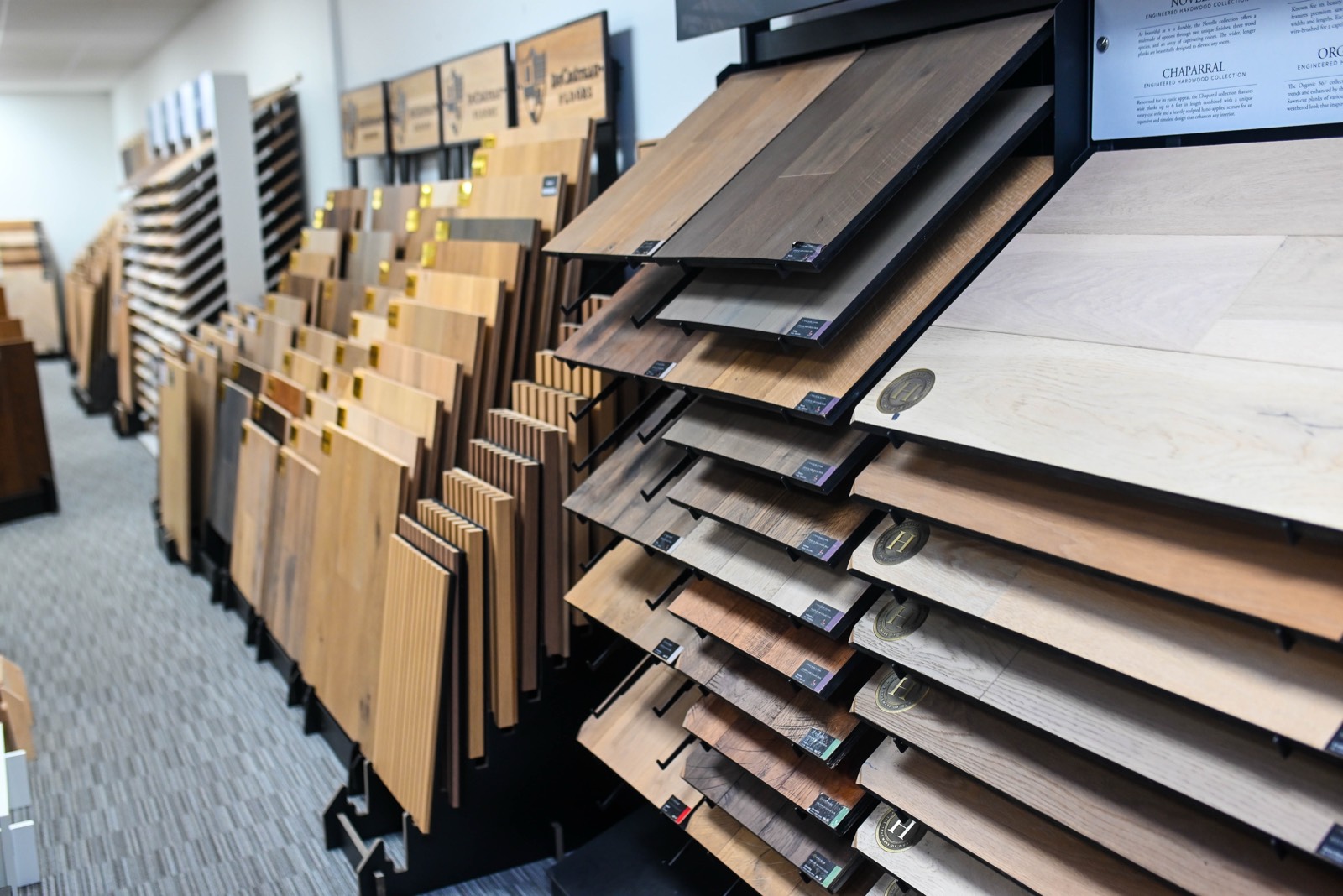
Tiered display rack with engineered hardwood samples fanned out
Every board on the wall has its wear layer on the tag.

Patterns

Herringbone and chevron: the two patterns people mix up

The difference, in one paragraph

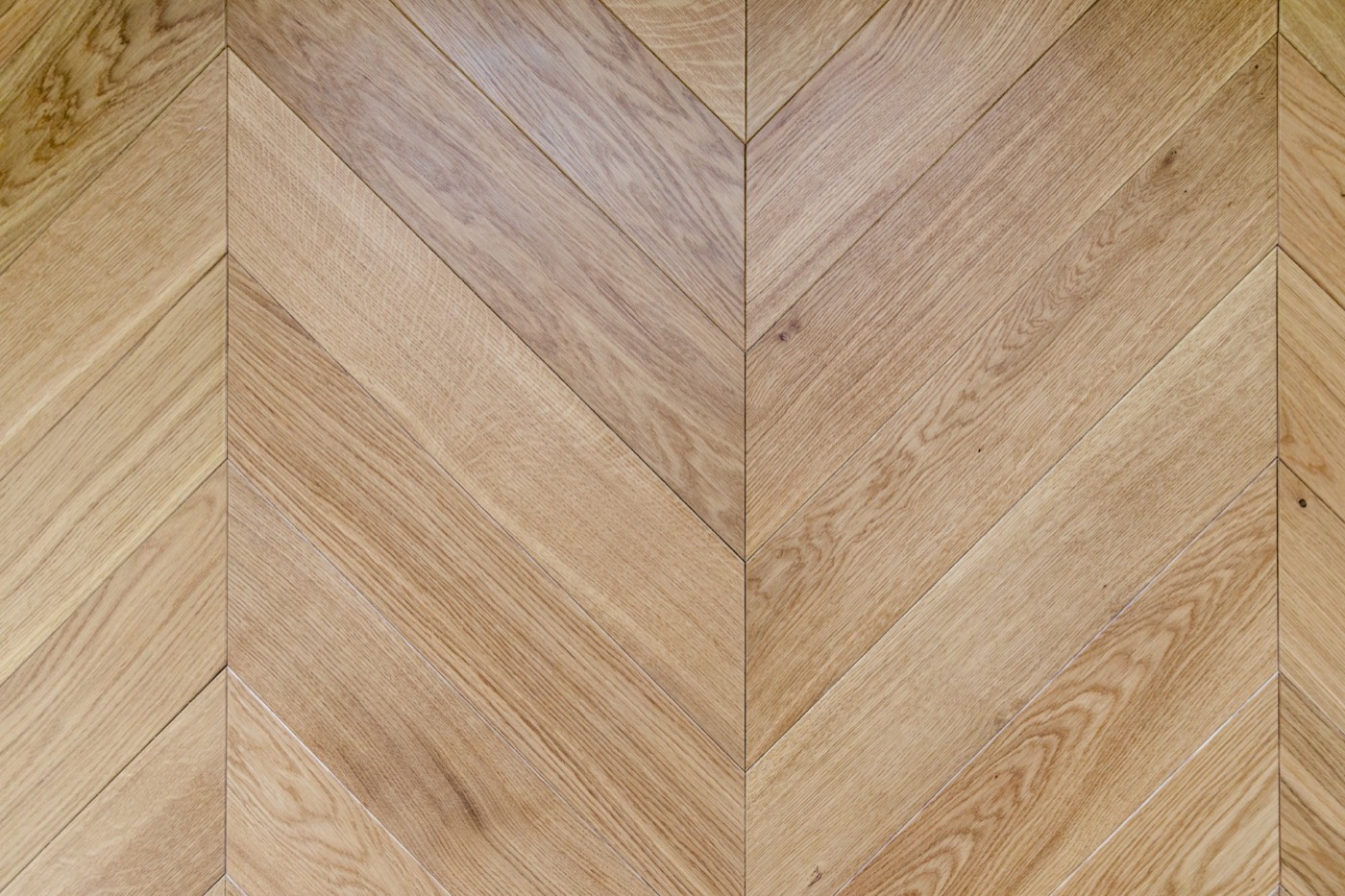
Herringbone is rectangular boards laid at ninety degrees to each other, so the ends meet the sides and the pattern steps. Chevron is boards cut at an angle - usually forty-five degrees - so the ends meet point to point and the pattern forms a continuous V.

Herringbone is the older, quieter one. Chevron is the one that reads as deliberate from the doorway.

French oak laid in a chevron pattern, boards meeting point to point in a continuous V
Chevron: boards cut on an angle, meeting point to point.

Where the extra money goes

Material waste runs 15 to 20 percent against roughly 7 to 10 percent on a straight lay, because every angle produces an offcut. Labor is slower, because a pattern floor is set out from a center line rather than started at a wall, and a single board out of square compounds across the whole room.

On a slab it also demands a flatter substrate than a straight floor does - a dip that a plank would bridge shows up as a lifted point in a pattern.

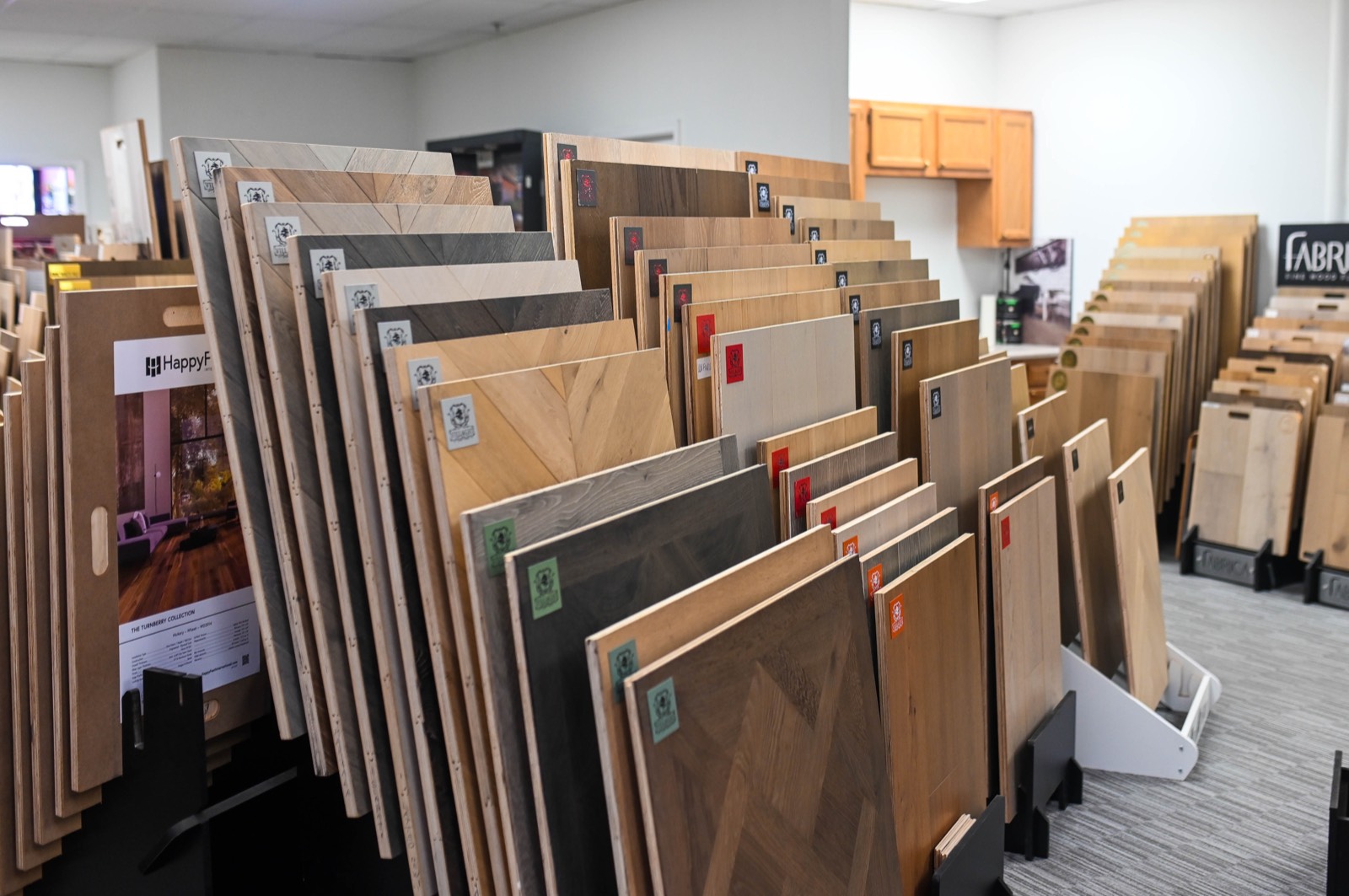
Herringbone and chevron pattern samples displayed among plank boards in the store
Both patterns are on the wall, not just in a catalogue.

Where it works: entry halls, formal dining rooms, and any room where the floor is meant to be the thing you notice. Where it does not: long narrow corridors, where the pattern fights the direction of travel. We have laid both across the Valley, including a herringbone floor in Tempe - and a pattern is one of the things you genuinely cannot judge from a photograph.

Fifty makers. One room. No appointment.

10801 N 24th Ave, Suite 112, Phoenix - Mon-Fri 9 AM-3 PM.

Inside the store

What a visit to the store is actually like

Most flooring stores in Phoenix run on appointments and commission. We do neither. Walk in between nine and three on a weekday and somebody who knows the wall will walk it with you.

  1. Tell us about the rooms

    Which rooms, what is on the floor now, whether the house is on a slab, what the afternoon light does, whether there are dogs. Five answers, five minutes.

  2. Walk the wall

    About twenty minutes. Those five answers cut a thousand samples down to roughly five, which is a better use of your morning than walking the aisles alone.

  3. Take them home

    Store lighting is built to make flooring look good; your hallway is not. See the boards at nine in the morning and again at four, against your own cabinets.

The people you will actually deal with

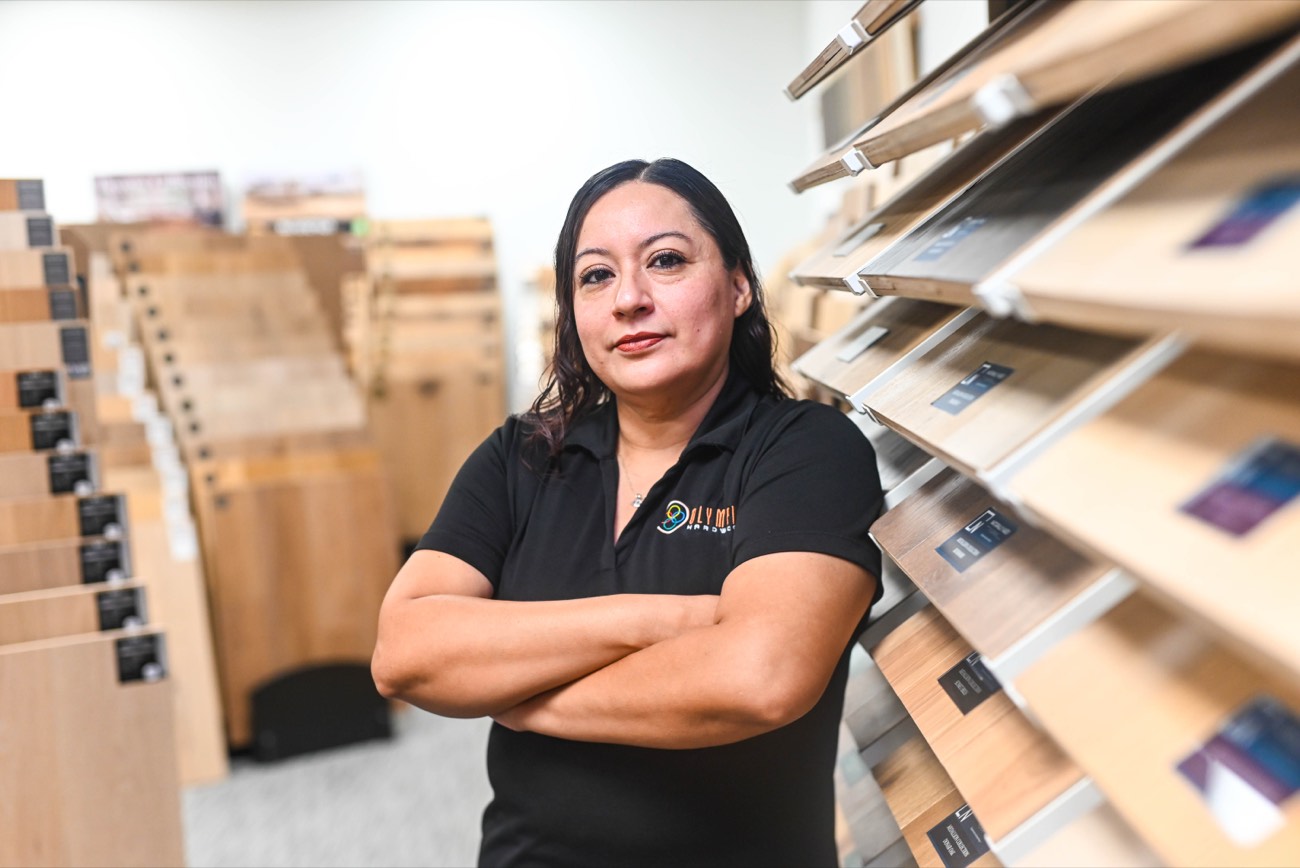
Same faces in the store, on the phone and at the final walk-through. Nobody here works on commission, so there is no reason for anyone to steer you toward a particular board.

If you cannot get here, we bring it to you: a phone call first to get the brief, then one of us arrives with hand-picked samples chosen against it - not a random case of whatever is in the van - and measures while we are there.

The Olympic Hardwood Flooring team standing together in their Phoenix flooring store
Member of the Olympic team standing among the sample racks in the Phoenix flooring store
Somebody who knows the wall walks it with you.
Rafal Nalej, owner of Olympic Hardwood Flooring
Rafal, the owner. Nobody here works on commission.
Olympic team member working at the showroom desk with paperwork and a computer
The desk where the phone gets answered. No call center, no ticket number.

Olympic Hardwood Flooring, 10801 N 24th Ave, Suite 112, Phoenix AZ 85029. Open Mon-Fri 9 AM-3 PM. Call or text (602) 535-1214.

Three we know best

We represent around fifty makers, but three of them account for most of what leaves the store - and they cover three genuinely different tastes.

French oak · our core line

Naturally Aged Flooring

A family-owned Southern California manufacturer with more than thirty years in the trade, and the source of most of the French oak we sell. The Medallion Collection is the heart of it: 7½-inch European oak, a sawn 3 mm wear layer, lightly wire-brushed.

European oak · two grades

DuChâteau

Splits its hardwood into two clearly different registers. Select grade keeps a smooth, even surface with uniform grain. Aged character grade leans the other way, into free-forming grain, knots and cracks. All engineered, which is what makes wide European oak work on a slab.

Color & hand-crafted detail

Provenza Floors

Where you go when the floor is meant to be the loudest thing in the room. Rich colors and hand-crafted surface detail, with treatments that push the natural character of the wood rather than flattening it.

Brand matters less than four specifications

What decides whether you still like a floor in ten years is the same handful of things regardless of who made it: wear layer thickness, board width and length, texture and sheen, and how the grade handles knots and color variation.

We carry about fifty makers precisely so the answer can be the right one for your rooms rather than the one on our shelf. The four decisions, in the order that works →

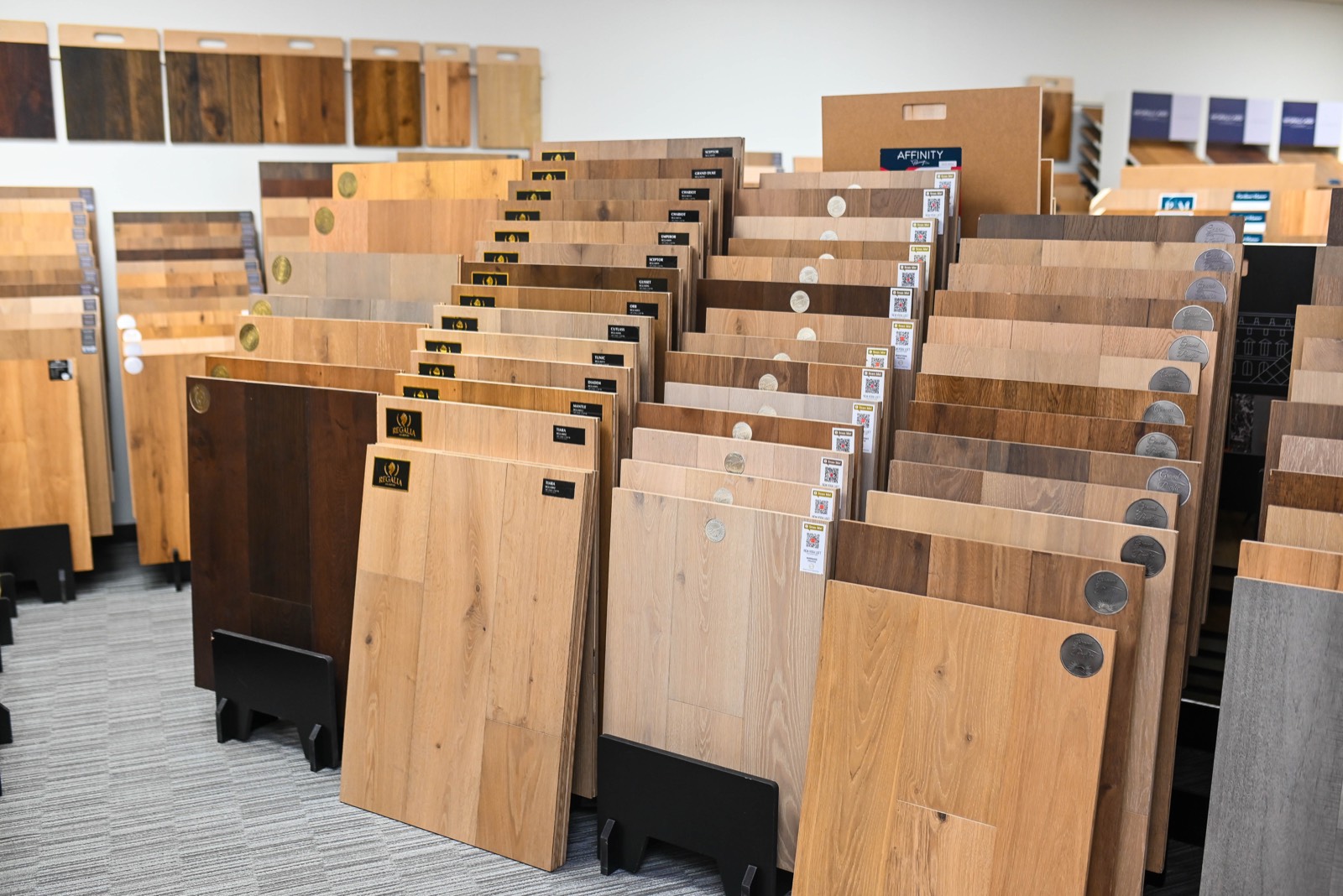
Rack after rack of hardwood samples from different makers in the Phoenix flooring store
Fifty makers, side by side, in one room.

A word about vinyl plank

We're a hardwood company, and hardwood is what we'll recommend in almost every room. There are a few rooms where it honestly isn't the right call - a laundry that has flooded before, a below-grade space, a rental that needs to be waterproof more than beautiful. In those, we'd rather tell you plainly than sell you a wood floor that will fail.

Questions people ask before choosing

How much does it cost to install 1000 square feet of hardwood flooring?

It is decided by six things, and four of them happen before a single board is laid: what has to come off the floor now, how flat the slab is once it is bare, the wear layer and width of the board you choose, the pattern it is laid in, and how the edges, stairs and transitions are handled. A 1,000 square foot job over a flat slab with carpet on it and a 5-inch board is a different number from the same area over glued-down tile with a 9-inch board in herringbone. We measure in person and put the whole thing in writing, itemized, so you can see which line is doing the damage.

What type of wood flooring is best for Arizona?

Engineered white oak, in most houses. Engineered because most Valley homes sit on a concrete slab, and cross-grained construction is what keeps the joints closed when indoor humidity drops into single digits for months. White oak because its open grain hides the haze that fine desert dust leaves on a finish, and because it takes a stain evenly. Solid hardwood still makes sense upstairs over a wood subfloor.

Which brand of hardwood flooring is considered the best?

There is no single answer, and any flooring store that gives you one is selling what it has in stock. What decides whether you still like a floor in ten years is the same four things regardless of the name on the box: wear layer thickness, board width and length, texture and sheen, and how the grade handles knots and color variation. We carry about fifty makers precisely so the answer can be the right one for your rooms rather than the one on our shelf.

What is the difference between white oak and red oak?

Red oak has a busy cathedral figure and a pink undertone that fights most modern paint colors. White oak runs straighter and quieter with a neutral undertone, so it sits under grays, greiges and warm whites without arguing. The cell structure differs too: white oak's pores are closed with tyloses, which is why it takes a stain evenly while red oak blotches. It is the main reason nearly every dark-stained floor you have admired started as white oak.

Should I choose engineered or solid hardwood on a concrete slab?

Engineered, in almost every case. Wood moves across its width as it exchanges moisture with the air. Stacking three to five plies at right angles means each layer restrains the next, so the board barely moves - and on a slab, where moisture migrates up from the concrete and indoor humidity swings hard, that stability is what keeps joints closed. The surface you walk on is real sawn hardwood either way.

Can engineered hardwood be sanded and refinished?

It depends entirely on the wear layer. A sawn layer of 3 mm or more will normally take one full sand or a couple of light ones. A rotary-peeled veneer of around a millimetre will not, and sanding it goes straight through to the core. Ask any store for the wear layer in millimetres before you buy. If they cannot tell you, that is the answer.

Which texture hides scratches best?

Wire-brushed and hand-scraped, comfortably. Both break up the surface so light does not fall evenly across it, and small scratches disappear into the texture. Smooth is the most modern-looking and the least forgiving. In a house with dogs and desert dust, texture is a practical decision rather than a stylistic one.

What sheen level should I choose in Arizona?

Lower than most people expect. Above roughly 50 percent gloss the floor looks formal and shows every scuff and every speck of dust. Around 15 percent, low lustre, reads like an expensive European oil-rubbed finish and forgives almost everything. Fine desert dust is why low sheens dominate in Valley homes.

How much more does a herringbone floor cost than a straight lay?

Two things move: material and labor. Waste runs roughly 15 to 20 percent on a pattern against 7 to 10 percent on a straight lay, because every angle produces an offcut. Labor is slower, because a pattern is set out from a center line rather than started at a wall, and one board out of square compounds across the room. A pattern also demands a flatter slab than a straight floor does.

Do you bring samples to the house?

Yes, and plenty of clients never come into the store at all. It starts with a phone call to get the brief - which rooms, what is on the floor now, what you are drawn to - and then one of us arrives with hand-picked samples chosen against that brief rather than a random case of whatever is in the van. We take field measurements and inspect the subfloor while we are there.

Do you sell luxury vinyl plank?

We are a hardwood company and hardwood is what we recommend in almost every room. There are a few rooms where it honestly is not the right call - a laundry that has flooded before, a below-grade space, a rental that needs to be waterproof more than beautiful. In those we would rather tell you plainly than sell you a wood floor that will fail.

Take a few boards home.

Fifty makers on one wall in north Phoenix. Walk in Mon-Fri 9 AM-3 PM, or call and we will bring hand-picked samples to the house.